Advertisement is a great way to earn money by posting ads on your blog, website, or app. There are many companies willing to pay large sums of money in order to get in touch with their target audiences, so you can get paid to post ads for your audience to see and interact with.
There is more than one option for how to apply advertisements. And this article will discuss them in tiny detail.
Does the “Get Paid to Post Ads” system actually work in 2026?
Getting paid for posting ads online is a legitimate business model that includes passive income from ad placements. It still works and thrives in 2026 for the two main reasons. First, there appear more and more easy ways of advertising, including automated monetization and brand new ad formats, which the audience can’t resist.
Additionally, and this is the main part, people have been consuming and will massively consume content online on, for a myriad of reasons.
However, let’s provide at least one stipulation!
To get real money results, treat your posting ads for money both as a business and a passion. That basically means being relentless to learn marketing and other techniques, getting to know how to monetize your niche traffic and how to win your audience.
How to get paid for advertising on your blog or website?
Advertisement is the most common way for website and blog publishers to make money. Brands are ever willing to advertise products and services, and you can directly offer to connect them with your audience for a fee. The ads can come in many shapes and formats, including display ads, video ads, guest posts, sponsorships, smartlinks, affiliate links, etc.
Let’s have a closer look at how to post ads and earn money.
1. Display ad network
Now, the established fact! Finding advertisers can be an annoying task for a publisher. Someone can handle that part for publishers. How?
An ad network is a platform that connects advertisers to websites seeking to host advertisements. It aggregates advertising spaces supplied by website publishers and matches them with demand from advertisers. In other words, display ad networks show advertiser’s ads on your site via a small ad code.
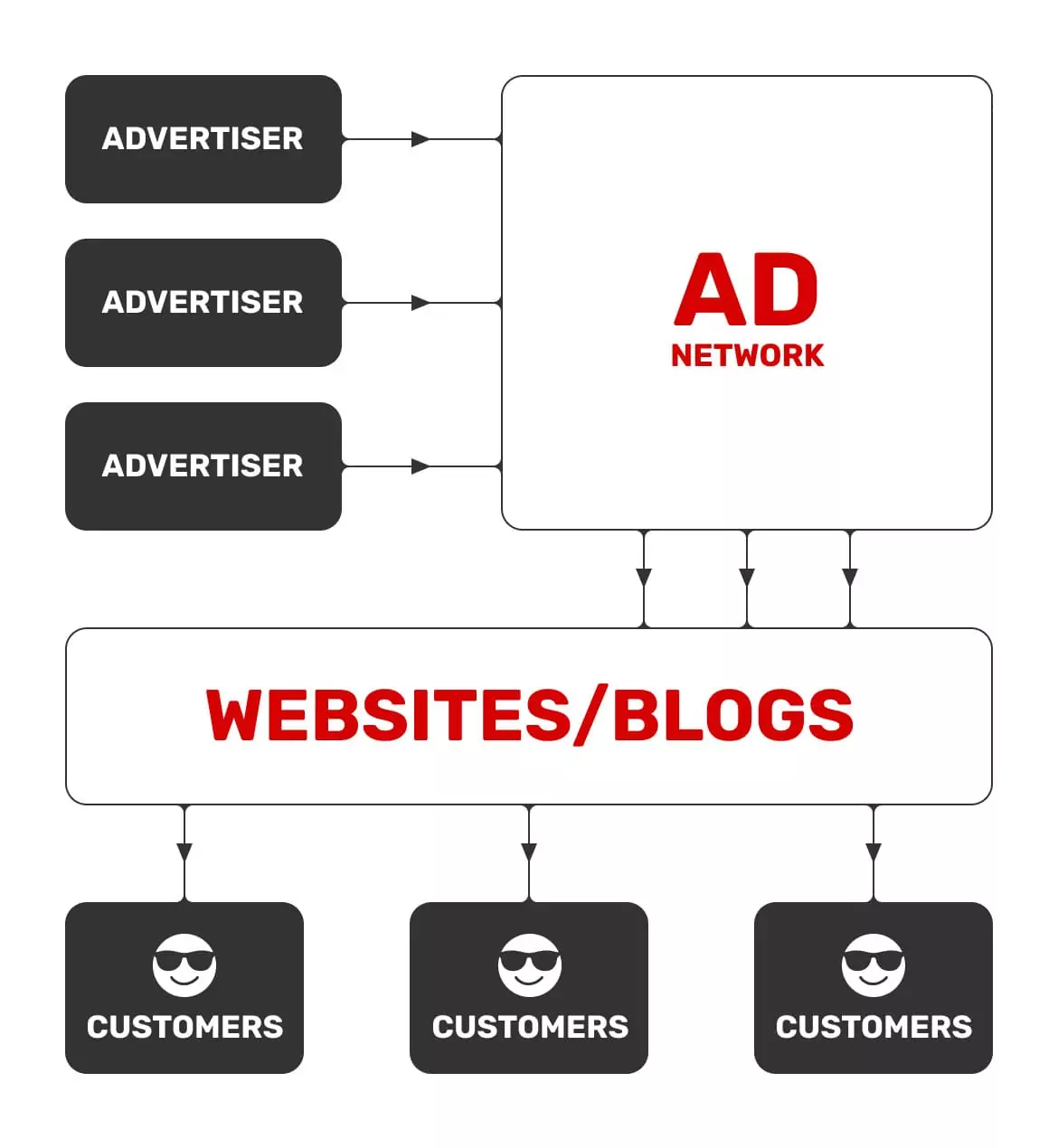
Without an ad network, you would have to pitch to potential advertisers directly, which can take a lot of time and effort. But an ad network gives you access to brands that have already shown interest in placing ads, and you’re free to work with the ones you want.
Adsterra is a territory of growth for thousands of website owners, providing all the tools necessary to advertise for money. Our platform gives you access to over 16,000+ advertisers offering high-paying ads.
How to post ads and get paid using ad networks
There are specific steps to take if you want to make money from an ad network. You first have to find a suitable ad network for your website and register. The network will review your site and decide whether to accept you. Requirements vary, but most networks look at traffic, the volume of content, and the niche. Afterward, you have to choose your desired ad formats and monitor your earnings. To make money from home posting ads is easy.
Adsterra offers fast approval times for publishers and has no minimum traffic requirements.
Choose an ad network
You should find a suitable ad network that fits your website. Some networks are generic, while others serve various website niches. Before signing up, you should check the requirements of the network and be sure of meeting them. Then, you can register and wait for a review and approval.
Choose ad formats
After getting approved, you’d need to pick the ad formats that fit your website. The ones on Adsterra include.
- Popunder: An ad appearing on the full screen behind an active browser window. The visitor can hardly miss it after closing the browser window.
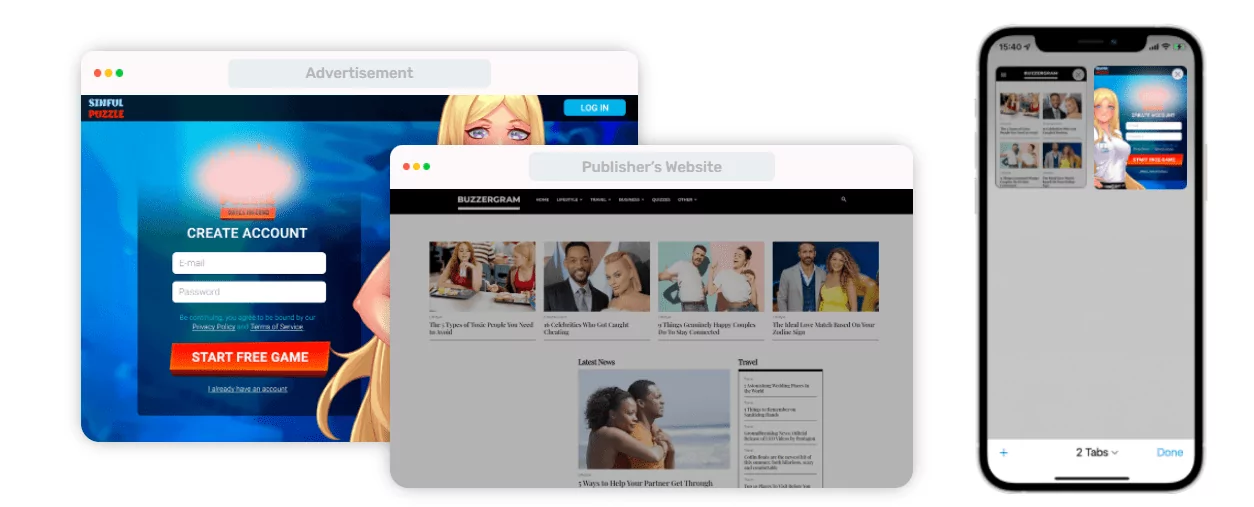
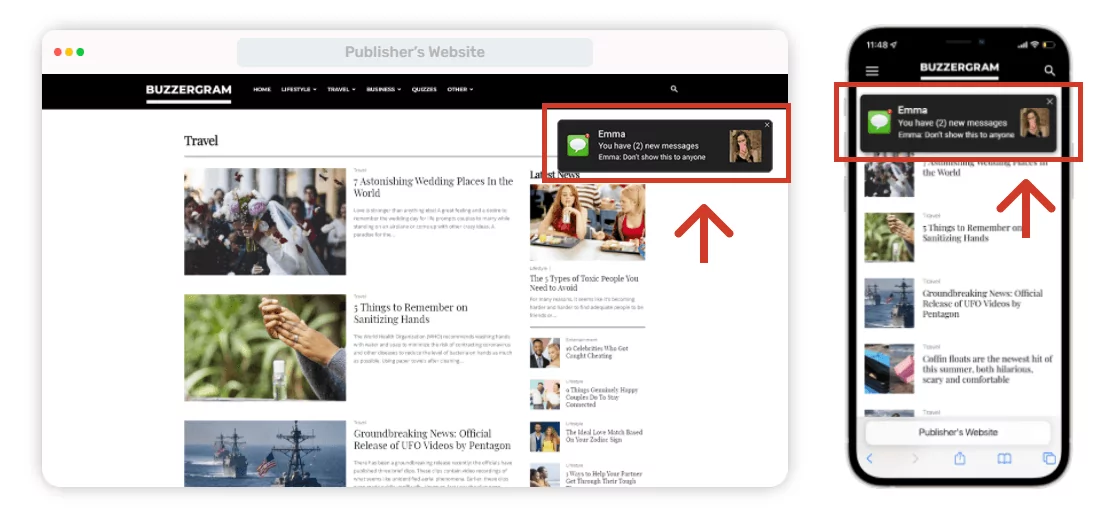
- Social Bar: An ad designed to appear like a push notification. It can appear as an icon notification, custom widget, or In-Page Push, that have up to 33% higher CTRs than push ads.
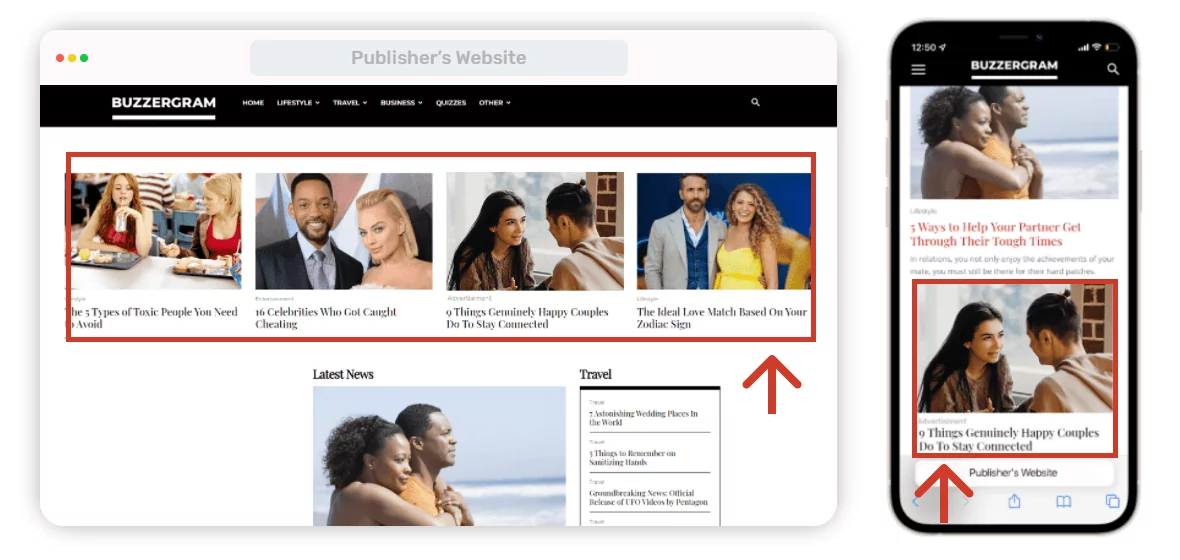
- Native Ad: This type of ad matches your website’s look, feel, and function. It could be a Native Banner ad, a native video ad, a guest post, etc.
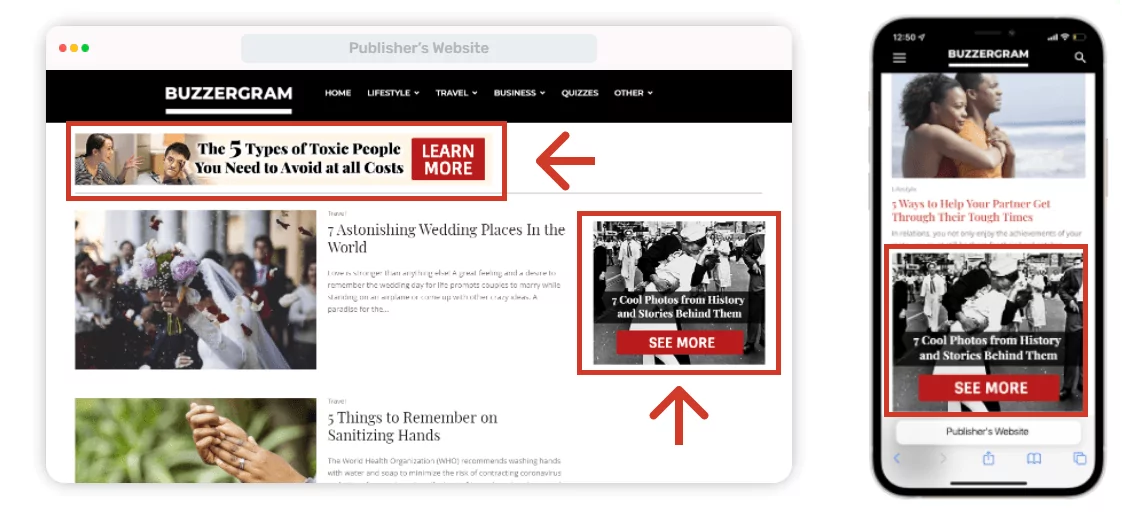
- Banner: A simple image with a call to action and a link to the advertiser’s webpage.
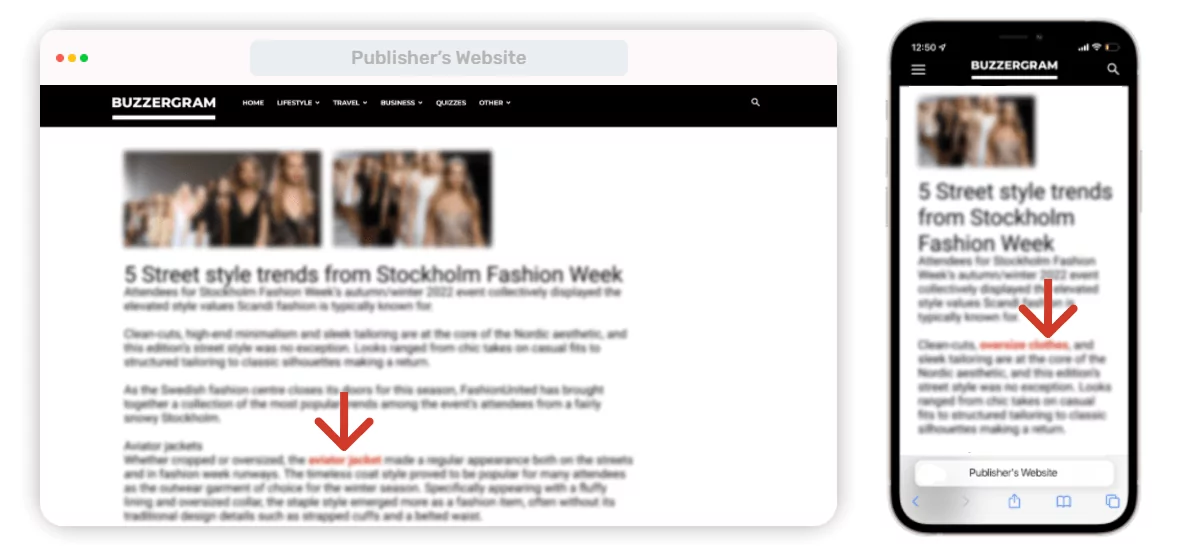
- Smartlink (Direct Link): A link that takes the user to a separate offers page, and Adsterra’s smart algorithm will decide what offers to show, so it would be relevant to your audience and you would have the best CPM possible. You may not even have a website to work with Direct Links.
Optimize your ads
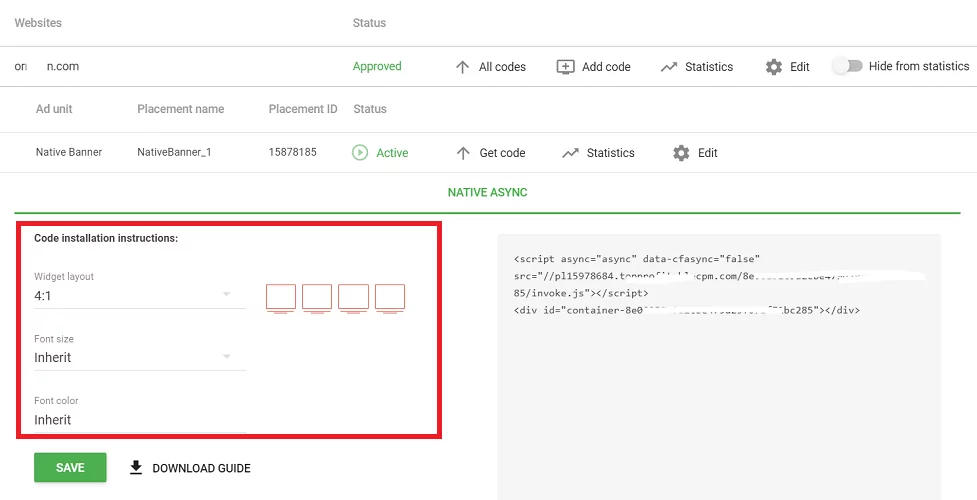
Your ads won’t be perfect at the first placement. Hence, optimizing them to fit well with your site is essential. Select the most visible yet non-intrusive banner sizes. Customize Native Banners to be more cohesive with your site’s content. Decide the combinations of ad formats you want to place on your site and the positions to place them.
Monitor your earnings
Most ad networks provide a dashboard where you can monitor how much you monetize with ads. You should keep tabs on your earnings and make adjustments to maximize your revenue. Yet, that doesn’t mean you should fill your whole site with ads in a way that’ll irritate the user. It’s more of testing different ad formats to see which ones deliver the highest earnings and sticking to those ones.
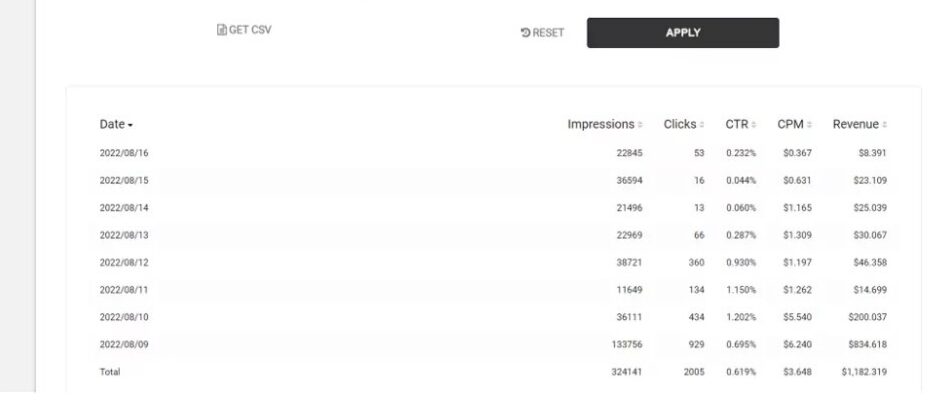
Adsterra lets you monitor real-time metrics and optimize your site for greater earnings. Sign up today to access creative ad formats and a steady stream of high-paying advertisers.
2. Affiliate marketing
Affiliate marketing is a process where publishers promote a product and earn commissions on every sale originating from their promotion. Here’s a step-by-step explanation:
- You register on an affiliate marketing platform.
- You look for a brand or an advertiser with an offer, and you generate a unique affiliate or referral program link to promote on your website. This link will have a tracking ID enabling the retail partner to monitor every referral from your website.
- You place the affiliate link on your website.
- A user clicks on the affiliate link, heads to the retailer’s site, and purchases the product.
- The retailer pays you a specific percentage of the sale.
There are many affiliate marketing niches that pay top dollar, e.g., finance and software products. If you need to learn more about the affiliate marketing business and connect with experts, there are many forums that can help you.
3. Sponsored posts
They represent another good way to make money from ads, that is, to earn money advertising for companies. If your blog ranks high on search engines for specific keywords and phrases, that means people will likely visit your website whenever searching for those terms.
You can take advantage of your high search rankings by offering sponsored posts.
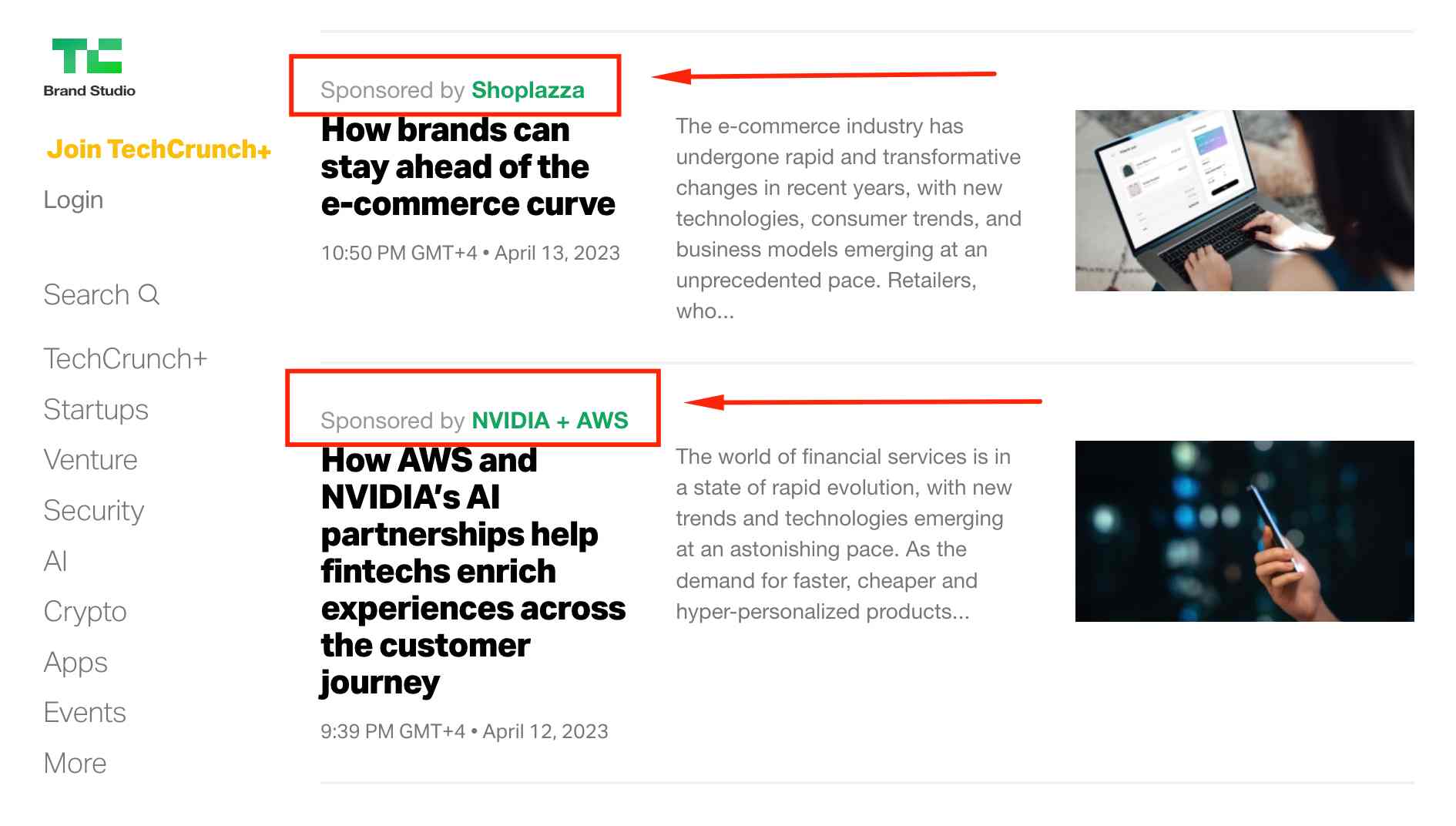
You can charge brands for each post as a whole or per word. You may also work out a commission structure and receive a percentage of any sale generated.
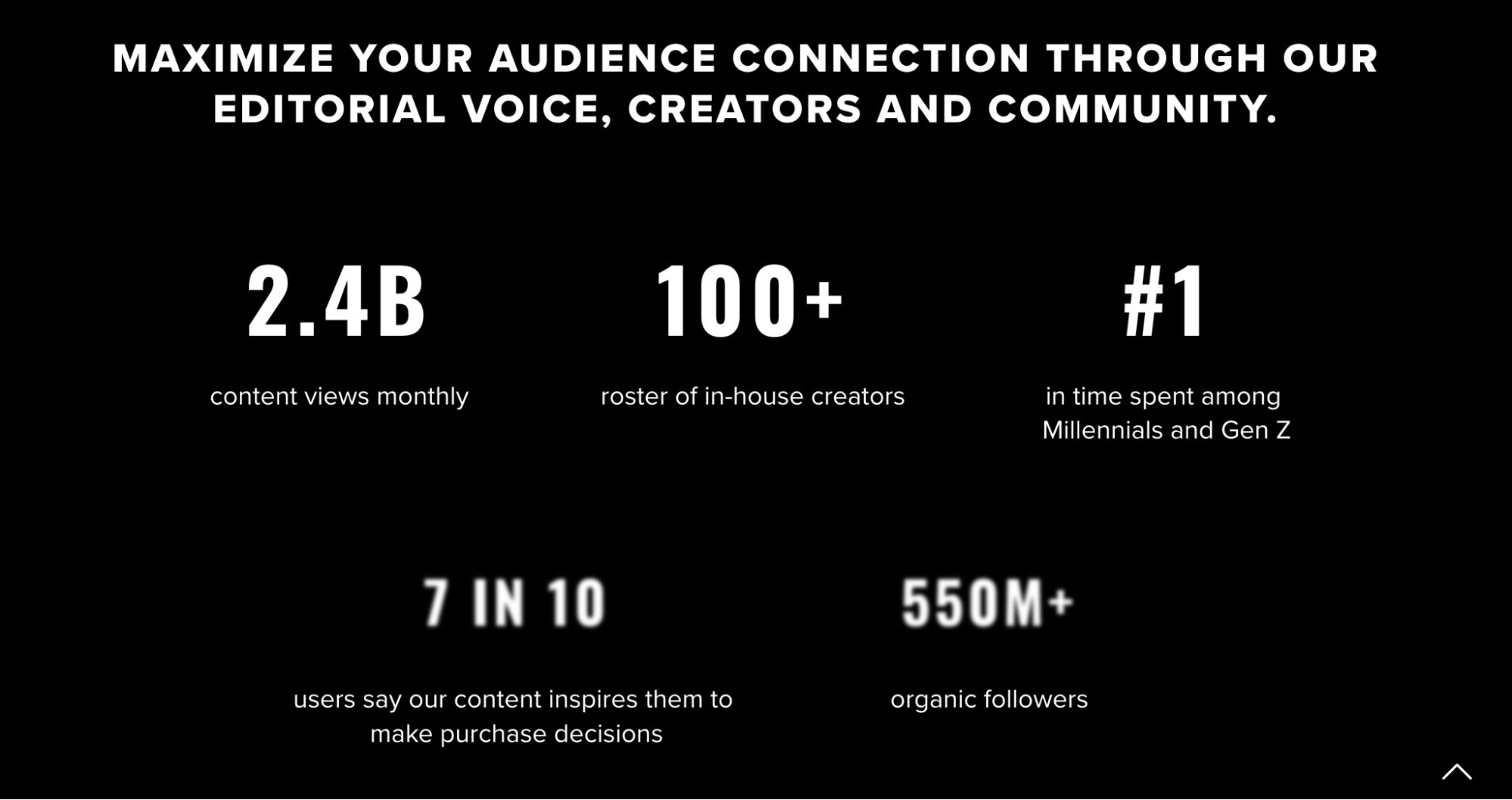
A good way to find brands willing to pay for sponsored posts is to include a media kit on your website. This media kit will show metrics about your website (monthly views, no. of users, etc.) and will pitch to advertisers what they can gain from working with you. Also, include contact information so that interested advertisers can reach out to you, and you can post ads and make money.
4. Create a news hub with ChatGPT
Running a blog enables you to share your thoughts, ideas, and opinions with others. However, if you have specific industry knowledge, you can take a step further and start a news hub. For instance, you might be a popular financial analyst or a fitness blogger or a sports commentator or whatsoever. You can create a news website and post articles frequently to attract readers.
ChatGPT, the popular artificial intelligence tool, can be of help. You can use it to generate news snippets and articles. However, the article will need some edits and fact-checking. If you build a successful news hub within a trending niche, you’ll likely find advertisers willing to spend hundreds or even thousands of dollars each month on ad placements. Learn more on how to make money with Chat GPT.
5. Newsletters
Newsletters are periodical emails that you send to subscribers, and they present another good opportunity for posting ads to make money. If you run a popular blog or website, you can insert a form to collect readers’ email addresses and send them newsletters. Your newsletters can include advertisements from brands that want to showcase themselves to your subscribers.
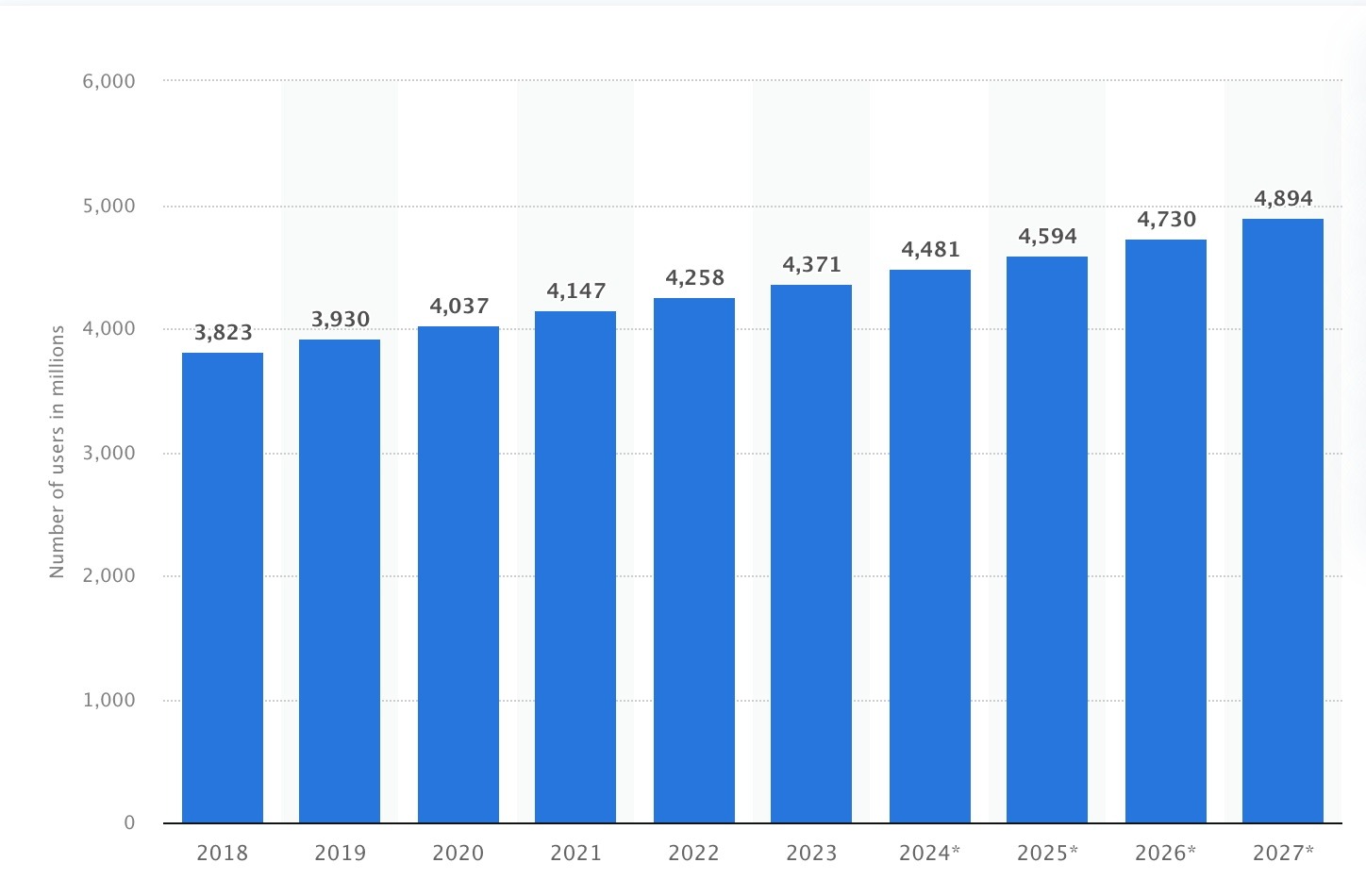
Your newsletters must be high-quality if you want subscribers to open them. Use creative introductions, write great content, and send emails consistently. There are currently over 4 billion active email users, and that number is increasing, meaning that newsletters have much more growth potential.
Get paid for posting ads on social media
It’s advisable to have social media pages for your website or blog. This will help you build a social following with your audience and connect with new readers. It will also help drive traffic to your site.
Another good thing about having social media pages is that you can also monetize them. You can get paid to post ads online on your social media page just as you would on your website.
Facebook is the world’s most popular social network, with nearly 3 billion monthly active users. You can create a dedicated Facebook page for your site and connect with your fans and subscribers.
There are several ways to monetize your Facebook page. You can use it to promote affiliate products and earn commissions on each sale. You can also sell your own physical products by running Facebook ads. Similarly, you can run ads for digital products such as e-books.
A little-known yet profitable way is to earn extra money leading your Facebook traffic to your own blog or landing page with ad codes. How about adding $2,000 monthly?
Instagram is another highly popular social media site that boasts more than 1 billion users. This site is based on the sharing of photographs and video clips. The platform is known for its Instagram influencers, which are popular accounts with many followers.
You can grow your Instagram and become an influencer. With a considerable number of followers, you can make money placing ads for different brands.

Twitter has more than 300 million users around the globe. This social media network is based on sharing short posts called tweets, which have up to 280 characters.
You can get paid to post ads online on your Twitter account just as it works on Instagram. In fact, there are Twitter influencers, although not as prevalent as those on Instagram.
With a popular Twitter account, you can charge brands and get paid to advertise online to your followers and earn significant revenue.

Pinterest is primarily an image-sharing service. It revolves around using “pins” to share photos you discover online and GIFs and videos on a smaller scale. Just like with other social media platforms, you can build a followership for your Pinterest account. With considerable followership, you can charge brands money to pin their best content on your profile and drive traffic to their websites.
YouTube
Almost everyone knows YouTube, the number one platform for sharing videos. You can post videos related to your website’s content and build a fanbase. With many subscribers, there’ll hardly be a shortage of brands willing to advertise to your audience. An advantage of getting paid to post ads on YouTube is that you can charge a much higher price than you’d do for other social media platforms.
Other proven ways to get paid to post ads
There are tested creative ways of posting ads to make money apart from ad networks, social media, newsletters, sponsorships, and the like. For example:
Freelance
There are countless brands that want to advertise their products but aren’t good at it. They need advertising experts to help them do that effectively, and you can render your services to them. You can sell your marketing expertise and also offer ad management services on a retainer. This is one of many creative side hustle ideas for website publishers to earn extra income.
Drive social traffic to a landing page
Speaking of Smartlinks, the principle of getting extra revenue works like this: you run a social media account with a significant following, so you drive social traffic to your (not someone else’s) landing page or your own blog with ad codes and generate leads or more ad views.
Podcasts
Podcasts are audio recordings that people listen to on their devices, primarily on their smartphones. There are countless podcasts covering different topics, and you’re free to start one for something related to your website. Brands advertise on podcasts the same way they do on a website, and you can make money posting ads on yours.
Comparison table: which method is right for you?
| How do you make money posting ads | How It Works | Where You Post Ads |
|---|---|---|
| Ad networks | Join a network that connects you with advertisers and place different ad formats (Social Bar, Popunders, Smartlinks, etc.) on your site to earn from views or clicks. | Website or blog (social media) |
| Affiliate marketing | Promote products using special tracking links and earn a commission when users buy through your link. | Website, blog, or landing pages |
| Sponsored posts | Publish paid content or articles promoting a brand and charge a fee or earn commissions. | Blog or website |
| Newsletters | Send emails to subscribers and include paid ads from companies in your newsletters. | Email lists |
| Social media advertising | Grow accounts and get paid by companies for ad product promotions. | Platforms like Facebook, Instagram, Twitter, Pinterest, YouTube |
| Freelance ad services | Offer advertising or ad management services to businesses that need help promoting their products. | Client projects (various platforms) |
| Drive traffic to landing pages | Use social channels or links to send users to pages with ads or offers and earn from actions or views. | Landing pages or blogs |
| Podcasts | Create audio content and include sponsored ads from companies within episodes. | YouTube, podcast platforms |
Tips on how to earn money from advertising effectively
Optimize your advertising inventory
Optimizing ad inventory helps maximize your website’s revenue. For example, you can create standard ad dimensions that companies will follow, or you can use dynamic pricing based on current demand for specific ad dimensions.
Monitor the performance of your ad slots to evaluate which ones perform better. Then, you can focus on the high-performing slots to maximize conversions for advertisers and, in turn, your ad revenue. Advertising is not a one-and-done deal. Constant monitoring is required to optimize your strategies and make money posting ads.
Adjust ad slots for advertisers’ needs
You can adjust your website’s ad formats and positions to fit advertisers’ needs. For example, a brand might request their ad to look exactly like your website’s native content. Thus, you might need to tweak the font, font size, and colors of your existing site to fit the advertiser’s graphics. Advertisers can also request specific formats, such as Popups and Popunders, which you’ll have to implement on your site. Adjusting your ad slots for advertisers’ needs shows that you value them and increases the chances of building long-term relationships. (Don’t miss our exclusive “How to Put Ads on a Website” article to learn more about placing ads.)
Use smart pricing strategies
Choose your pricing structure wisely. There are 3 main options for monetization in digital publishing: cost per click (CPC), cost per action (CPA), and cost per mille (CPM). CPC entails collecting a set fee for every viewer who clicks on your ad. CPA involves receiving a specific amount for an agreed action, usually a purchase. CPM means getting paid for every thousand views of an ad.
CPM and CPC are low-risk for publishers, as they receive money for every click or thousand views, regardless of user behavior. CPA has higher risks because you’ll only get paid when a viewer performs a specific action, such as a purchase. However, CPA offers tend to be high-paying when viewers perform the required actions. You can weigh your options to choose the best pricing model or combine multiple pricing models on the same site.
Tools and platforms worth using in 2026
Once you step into the field of getting paid to post ads online, you will have to choose out of tools and platforms to work with. First, you need a platform to launch your site on. Most popular blogging platforms are WordPress, Wix, Medium, or Blogspot that work great to start monetizing with ads.
The next thing you need is to select an advertising network, like the flexible and niche Adsterra or the global giant like Google AdSense, to get access to thousands of advertisers and get ad codes for your website or blog. You might also want to use social media platforms to gain followers and drive more traffic to your site with ads, by using platforms like Facebook, Instagram, TikTok, Pinterest, X (Twitter), and YouTube.
How to get paid for advertising: FAQs
How do you choose which way to get paid for posting ads?
The first thing to consider is your type of website or app. Some ad strategies best fit specific types of websites, e.g., native ads work very well with news sites, and affiliate marketing works best with product review sites. You’re free to test different methods to see which ones generate the ad revenue and stick to them.
How much can I make from putting ads on my website?
There’s no perfect answer to this question. You can make anything from $50 to $800 or more daily from posting ads, depending on your traffic, niche, and the companies you work with, among many other factors. Many publishers make tens or hundreds of thousands of dollars from selling advertisements.
Is it still possible to make money just by running ads on a website?
Yes, it is still possible to make money just by running ads on a website. You can earn passive income by allowing companies to advertise on your blog, website, or social media platforms. Additionally, sponsored posts are a popular way to promote products and services, where website owners create engaging content that includes advertisements, often resulting in a one-time payment for the post. Programmatic advertising is among the most effective monetization options, allowing website and app owners to sell their inventory in real time and scale effectively by accessing a wide pool of advertisers.