

Best CPM ad networks for publishers can turn regular website traffic into a predictable source of revenue, but choosing the right platform is not only about finding the highest number in the CPM column.
Two networks can offer the same traffic volume and produce very different earnings. The difference may come from the audience GEO, ad format, fill rate, advertiser demand, traffic quality, or even the way a network calculates its effective CPM. For publishers, the goal is simple: monetize as many valuable impressions as possible without making the website slower or the user experience worse.
In this guide, we’ll explain how CPM monetization works, what metrics matter, and what to look for when comparing CPM ad networks in 2026.
What Are CPM Ad Networks and Why They Matter for Publishers
CPM stands for Cost Per Mille, where mille means one thousand. In a CPM model, advertising revenue is connected to the number of ad impressions rather than requiring a user to click an ad or complete a purchase.
A CPM advertising network acts as the intermediary between publishers and advertisers. Instead of looking for individual brands willing to buy every available ad placement, a publisher connects their website to the network and gives it access to their inventory. The network then matches those impressions with advertiser demand and serves suitable ads.
This model solves one of the biggest problems in digital publishing: unsold inventory.
Imagine that your website receives 100,000 visits a month and generates 250,000 ad impressions. Selling every single impression directly to advertisers would require a sales team, negotiations, contracts, campaign management, reporting, and constant search for new buyers.
An ad network handles much of this process for you.
CPM vs. CPC and CPA
CPM is only one of several common monetization models.
- CPM — revenue is primarily associated with ad impressions.
- CPC — the publisher earns when a user clicks on an ad.
- CPA — revenue is generated when a user completes a specific action, such as registration, installation, or purchase.
For publishers, CPM has one major advantage: you don’t need every visitor to click on an ad to generate revenue.
However, modern networks may use more sophisticated models than a simple fixed payment for every thousand impressions. For example, an effective CPM (eCPM) can take additional performance signals into account, including clicks and conversions. Adsterra uses an eCPM model for publishers, so the effective rate can change depending on traffic performance, GEO, seasonality, placement, and advertiser competition.
This is why comparing networks solely by their advertised CPM can be misleading.
Why CPM Matters for Different Types of Publishers
CPM monetization can work for a wide range of publishers:
- News and media websites;
- Entertainment and streaming platforms;
- Blogs and content projects;
- Forums and communities;
- Download and file-hosting websites;
- Gaming websites;
- Social traffic and content creators;
- Mobile-focused projects.
The amount you earn depends heavily on the quality and composition of your traffic.
A publisher with 20,000 visitors from a high-demand GEO can sometimes generate more advertising revenue than a website with several times more traffic from a low-demand GEO.
The same principle applies to ad formats. A highly visible placement with strong advertiser demand can produce a higher effective CPM than a standard banner placed where users rarely see it.
What Makes a High CPM Ad Network Different?
The phrase high CPM ad network sounds attractive, but a high advertised rate doesn’t automatically mean higher final earnings.
When comparing networks, look beyond the headline CPM and use this checklist.
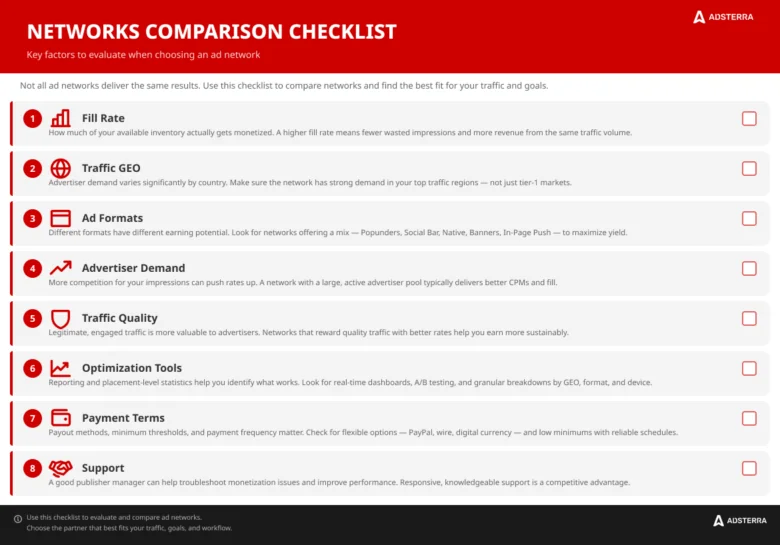
CPM Ad Networks for Small Publishers
Small publishers often face a different problem: some premium networks require substantial traffic volumes or have strict acceptance criteria.
That makes CPM ad networks for small publishers especially important for new websites, niche projects, and publishers whose traffic is growing but has not reached large monthly volumes yet.
Before applying, check whether the network has a minimum traffic requirement. Some platforms focus primarily on established publishers, while others are designed to accept websites with smaller or growing audiences.
Adsterra, for example, requires no minimum traffic volume for publishers and supports monetization for websites as well as social traffic. Its publisher platform also provides multiple ad formats, reporting tools, and a 100% fill-rate claim. You can begin with the format that fits your audience best and use performance statistics to see which placements generate the most revenue.
Ready to test CPM monetization with your own traffic? Join Adsterra as a publisher and start exploring the available ad formats and monetization options.
How CPM Ad Networks Work and Key Metrics That Actually Drive Revenue
The basic process is straightforward.
A publisher adds an ad code, SDK, or another integration provided by the network. When a user visits the website, the ad request is sent to the network. The platform evaluates the available demand and serves an advertisement that matches the available inventory.
The advertiser pays for the opportunity to show that ad. The publisher receives a share of the resulting advertising revenue.
Behind this simple process, however, there are several metrics that determine how much money the publisher actually makes.
CPM
CPM gives you a standardized way to compare monetization performance across different traffic volumes.
But there is an important detail: CPM is not necessarily the same as your final earnings rate.
Different networks can use different pricing and reporting models. That’s why publishers should always check exactly what their dashboard’s CPM or eCPM represents.
eCPM
eCPM means effective cost per thousand impressions.
It answers a practical question:
How much revenue did I actually generate for every 1,000 impressions?
eCPM is particularly useful when comparing different monetization strategies because it allows you to put different formats, placements, and traffic sources on the same scale.
For example, you might discover that a placement with fewer impressions generates a higher eCPM than a placement with significantly more traffic.
Fill Rate
Fill rate measures how much of your available ad inventory receives an ad.
If your website has 100,000 available impressions but only 80,000 are monetized, your fill rate is 80%.
A network with a slightly lower nominal CPM but a much higher fill rate can therefore generate more total revenue.
For example:
Network A: $5 CPM × 50% fill rate
Network B: $3.50 CPM × 95% fill rate
The second network may produce considerably more revenue from the same inventory.
This is one reason publishers shouldn’t make decisions based on CPM alone.
Traffic GEO
The country where your users are located has a major impact on advertising rates.
Advertisers generally compete differently for audiences in different markets, so CPM rates can vary significantly between GEOs. Tier-1 markets often attract strong advertiser demand, but other countries can also perform well depending on the vertical, device, format, and campaign demand.
There is no universal list of countries that will always deliver the highest CPM.
Rates change with seasonality, advertiser budgets, competition, device type, and traffic quality. Adsterra’s own publisher materials emphasize that CPM rates can fluctuate depending on factors such as season, ad placement, GEO competition, and advertiser bids.
Ad Format
The same traffic can generate different results depending on how you monetize it.
Common formats include:
- Banners;
- Native ads;
- Popunder ads;
- In-Page Push;
- Social Bar;
- Interstitials;
- Smartlink solutions for certain types of traffic.
The best option depends on the website and its audience.
A content-heavy website may benefit from native or banner placements integrated into the page. A streaming or download platform may have different opportunities. Social traffic without a traditional website can also require a different monetization approach.
For this reason, a good ad network pay per impression solution should offer enough flexibility to test different formats rather than forcing every publisher into the same setup.
CTR and User Engagement
CPM is associated with impressions, but user behavior can still influence the effective value of those impressions.
Advertisers want traffic that performs. If users interact with ads and eventually convert, advertisers may be willing to bid more for similar inventory.
This creates an important distinction between simply generating impressions and generating valuable impressions.
A publisher shouldn’t aim to maximize the number of ads at any cost. The better strategy is to find a balance between monetization, viewability, engagement, and user experience.
Placement and Frequency
Where you place an ad matters.
An ad that is technically present but rarely noticed has less value than a placement that users naturally see while browsing the page.
At the same time, adding too many ads can make a website slower, clutter the interface, and frustrate visitors. It can also reduce engagement with the content itself.
The goal is to build a monetization setup where ads have enough visibility to generate revenue without overwhelming the user.
Testing is the easiest way to find that balance.
Try different placements, compare their eCPM and revenue, and remove or adjust placements that consistently underperform.
Why Your CPM Can Change
CPM is not a fixed salary for every thousand visitors.
It can change from day to day because advertising is an auction-driven market. Advertiser budgets, demand, seasonality, GEO, traffic composition, device mix, and campaign performance can all affect the value of available impressions.
For example, rates may increase when advertisers compete heavily for a particular audience and decrease when demand becomes weaker.
This is normal.
Instead of reacting to every short-term CPM fluctuation, publishers should look at longer periods and compare revenue, eCPM, fill rate, traffic volume, and placement performance together.
How to Choose the Best CPM Ad Network
Before signing up with a new network, use a simple checklist.
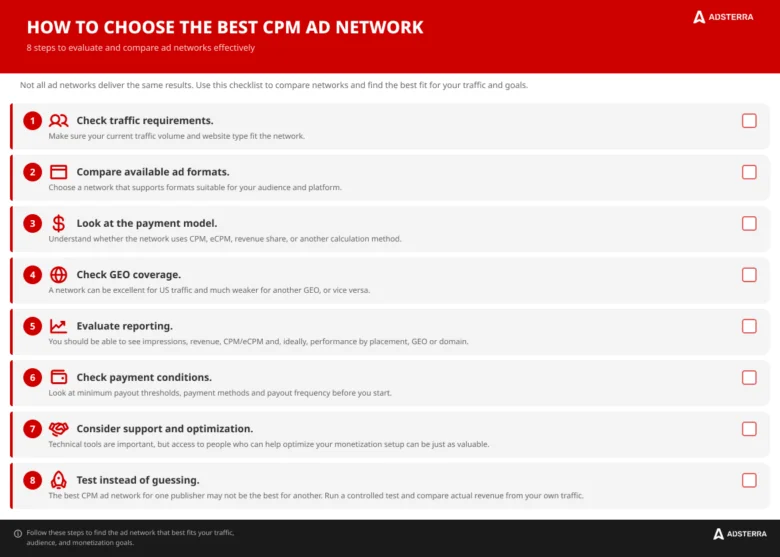
Ultimately, successful CPM monetization is less about finding a magical rate and more about building a system where quality traffic, strong advertiser demand, suitable ad formats and smart placement work together.
The right network should help you monetize the traffic you already have — and give you room to grow as that traffic increases.
How Ad Networks Benefit Publishers?
For publishers, the main value of an ad network is simple: it turns available ad inventory into revenue without requiring direct relationships with every advertiser. Instead of selling impressions one by one, publishers can connect their websites to an ad network and access demand from multiple campaigns through a single integration.
This can make ad monetization much easier to manage. A network can handle ad delivery, campaign matching, optimization, and reporting, while the publisher focuses on content and traffic growth.
Another important advantage is access to different ad formats. Depending on the platform, publishers may be able to monetize their audiences with display banners, Native ads, video ads, mobile ads, and other formats. Having several options makes it easier to adapt monetization to different websites and user journeys.
Access to More Advertiser Demand
A single publisher may have traffic from several countries, devices, and audience segments. Finding suitable advertisers for every impression independently would be difficult.
CPM ad networks for publishers solve this problem by connecting available inventory with advertiser demand at scale. Some platforms can also work with multiple ad exchanges, giving publishers access to a broader pool of potential buyers.
More competition for an impression can increase its value. This is one reason publishers looking for the highest cpm ad networks should pay attention not only to the advertised CPM but also to the depth of advertiser demand behind the platform.
Flexible Monetization
Different websites require different monetization strategies. A news site, gaming project, streaming platform, and mobile website may all have completely different audiences and user behavior.
Using several suitable formats can help publishers diversify their revenue instead of depending on one placement or one source of demand. Some publishers also experiment with multiple ad networks to compare performance and improve their overall monetization strategy.
However, adding more networks doesn’t automatically mean earning more. Too many integrations can complicate management and negatively affect page speed or user experience. The goal is to find a setup that provides strong demand without unnecessary technical overhead.
Easier Optimization and Scaling
Modern ad platforms provide publishers with performance data that would be difficult to collect through direct advertising deals. Metrics such as impressions, revenue, CPM rates, GEO, and format performance help publishers identify their strongest traffic segments and placements.
As traffic grows, the same setup can often be scaled without creating a proportional increase in operational work. This makes a CPM network particularly useful for publishers who want to build a long-term monetization strategy rather than sell individual campaigns manually.
How to Choose the Best CPM Ad Network
There is no single network that will be the best CPM advertising network for every publisher. The right choice depends on your traffic volume, GEOs, website category, available inventory, and preferred formats.
Start with the following criteria.
Traffic Requirements
First, check whether the network accepts your current traffic volume.
Large publishers may have access to premium platforms with strict requirements, while smaller websites should look for the best CPM ad network for low traffic or platforms that don’t impose demanding minimums.
Traffic quality matters as well. A network may accept your volume but still have limited demand for your particular GEO or niche, so acceptance alone shouldn’t be the deciding factor.
CPM and Revenue Potential
Comparing CPM rates is useful, but don’t choose a network based on one headline number.
The best paying CPM ad networks are not necessarily the ones advertising the highest nominal CPM. Your actual earnings depend on fill rate, advertiser demand, traffic GEO, ad format, and the percentage of impressions that can be monetized.
A network offering a fixed CPM ad network model may provide more predictable rates, while dynamic CPM or eCPM models can adjust to real-time advertiser demand. Understanding how a platform calculates and reports revenue is therefore essential before making a comparison.
Ad Formats
Check whether the network supports the ad formats that fit your website.
Depending on your audience and content, you may want access to native ads, display formats, video ads, rich media, or mobile ads. A wider selection gives you more opportunities to test different placements and find the combination that performs best.
The best cost per impression CPM ads networks should make it possible to monetize your inventory without forcing you to compromise the way your website works.
GEO Coverage and Advertiser Demand
A network can perform exceptionally well for one GEO and much less effectively for another. Before signing up, check whether the platform has strong advertiser demand in the countries where most of your users are located.
This is particularly important when comparing top CPM ad networks for publishers. A network with impressive global statistics may not necessarily be the best option for your specific audience.
Reporting and Optimization
Good reporting should show more than your total revenue.
Look for information about impressions, CPM or eCPM, GEO, devices, formats, and individual placements. Detailed reporting makes it easier to understand which parts of your ad inventory generate the most value.
If you use tools such as Google Ad Manager, check how easily the network can fit into your existing setup. Publishers working with several demand sources should also consider whether the platform supports the integrations and workflows they already use.
Payments and Support
Before joining, check the payment threshold, available payment methods, payment frequency, and any conditions that apply to publisher payouts.
Support is another practical consideration. When an ad suddenly stops serving or revenue changes unexpectedly, being able to contact a responsive publisher team can save a significant amount of time.
Ultimately, good CPM ad networks should combine competitive demand with transparent reporting, reliable payments, useful formats, and practical publisher support.
Top 15 highest-paying CPM ad networks for publisher
Here is a list of different ad networks that will help you to dive much deeper and choose the right ad network for your online business.
1. Criteo

Criteo helps you achieve high fill rates and get matched with top advertisers. Their technology solutions match the highest CPMs with your high-quality content, provided that you send over 100,000 page views per month. Simplify your ad server setup and get more ad revenue from Criteo’s high-quality roster of over 15,000 advertisers worldwide.
Criteo has a global network of 21,000+ servers responding to over 120 billion requests per day in milliseconds, allowing you to reach customers no matter where they are. There are no hidden costs or ambiguous bidding mechanisms. You can eliminate third-party fees and keep the full value of Criteo-purchased standard display ads, native ads, and even ad-blocked inventory.
Features
- Requirements: 100,000 page views per month;
- Tracking campaign results;
- Custom banners;
- Mobile, social, and desktop support;
- Minimum payment: $150;
- Payment methods: PayPal, Check, and Wire Transfer;
- Payment Frequency: First week of the month;
- Ad Monetization Options: CPC, CPM;
- Support Email: No Support.
2. Adsterra

Adsterra is one of the highest-paying CPM ad networks for publishers that pay for impressions. The top ad networks for publishers and webmasters set no entry limits to traffic volumes. Adsterra is famous for its Partner Care approach and has been praised many times on Trustpilot and other rating agencies.
Key figures and facts about Adsterra:
- 35B+ impressions monthly;
- 15K+ direct advertisers with 1.6BN conversions per year;
- 36K trusted publishers;
- 248 GEOs;
- High CPM ads network;
- Live chat support for all partners.
Core benefits for publishers
- Fast website approval. Being a competitive AdSense alternative, Adsterra offers prompt approval soon after you register;
- Payment methods: Wire Transfer, Paxum, PayPal and other most-used platforms, including cyber money, Local Direct Bank Transfer;
- Payment Frequency: Automated payouts (NET-15);
- Minimum payment threshold: $5 (e.g., for Paxum);
- Multiple ad formats for monetization: Popunder, Social Bar (or In-Page Push ads), Native Ads, Display Banners, Smartlinks (also called Direct Links), and Interstitial ads;
- Partner Care program: Expert managers and support team;
- Extra Income Referral Program: You earn an additional 5% from each referral;
- Anti-malware protection: Robust in-house and third-party security solutions.
3. PopMyAds

A huge pop-under ad network with over 300 million monthly visitors. Their CPM rates vary according to website niche, audience country, and geographical factors. PopMyAds offers great ratios for impressions, a good revenue CPM program, and an innovative anti-fraud system that filters out bad traffic.
Core features
- Payment methods: Paypal, Payza, Wire Transfer;
- Minimum withdrawal: $5;
- Wire Transfer – minimal withdrawal is $500;
- Ad formats: Pop-up and pop-under ads;
- Customer support: 24/7 clients’ support;
- Payment frequency: Upon publisher’s request.
4. HilltopAds
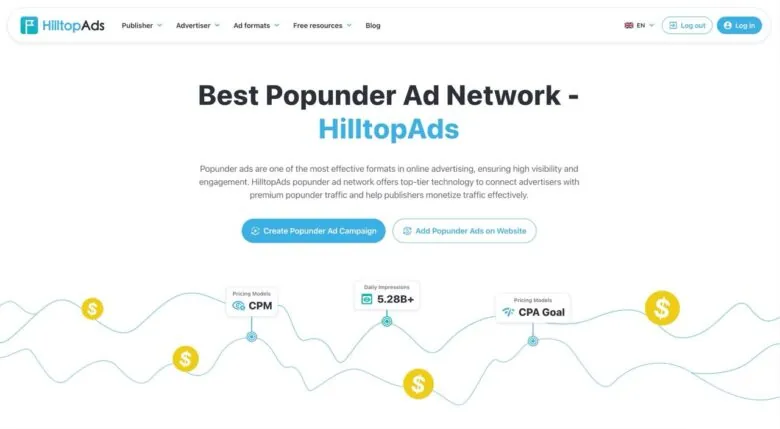
HilltopAds offers a range of high-converting ad units, automatically tailored to your website and device type, to help you get the most out of your traffic. Choose from top-performing formats including Popunder, Banner, In-Page Push, Video, and Native ads.
Core features
- Minimum payout: $20
- Payment methods: Bitcoin, Capitalist, USDT TRC20/ERC20, Wise, PayPal, Wire Transfer, Paxum, WebMoney, UnionPay.
- Payment frequency: Weekly, Net 7
- Monetization models: CPM
- Support: Qualified support from managers via email, Telegram or online chat during business hours.
- Ad formats: Popunder / Popup ads, In-Page, VAST or slider video, MultiTag Inpage, MultiTag Banner, Direct Link
5. VDX.tv

VDX offers website-friendly ad formats that improve user experience. It selects publishers by setting up the entry to 500K monthly pageviews. VDX allows website visitors to choose among various ad formats such as in-stream, display, and mobile. They offer satisfactory CPM, while publishers can earn 55 percent of their ad serving ad revenue after registration.
Core features
- Variety of ad formats: mobile ads, ads for in-app, desktop, and table (pre-rolls and rising stars);
- Context-friendly targeted ads adapt easily to inventory design;
- Generates real-time performance statistics via custom reports for global advertisers in top countries like the USA and United Kingdom.
- Minimum payment: $50;
- Payment regularity: Net 45 days;
- Payment methods: PayPal and bank check;
- Requirements: 500,000 monthly pageviews.
6. Revcontent
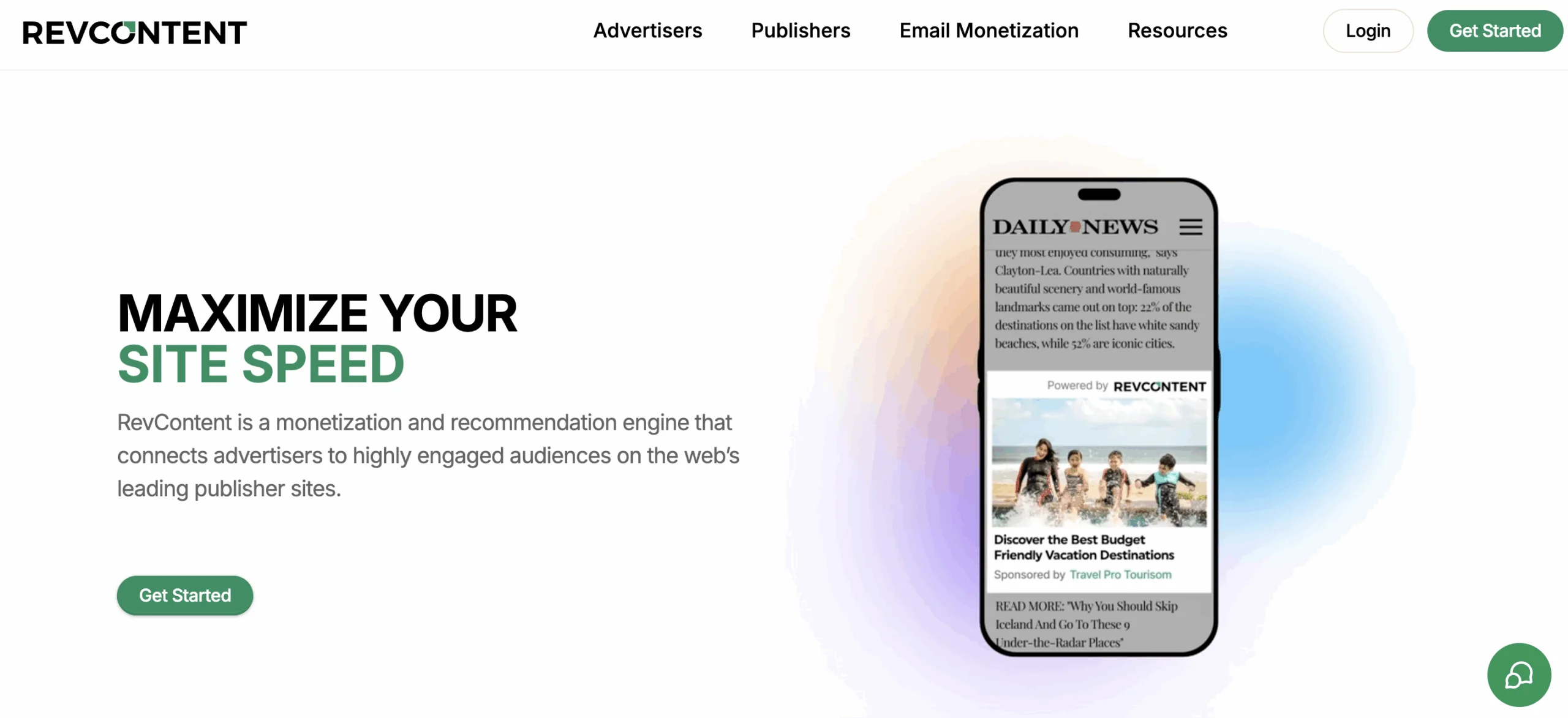
Revcontent is a native ad platform for top publishers that pays every 30 days with a $50 minimum withdrawal. You can monetize by implementing header bidding and serving native ads for mobile apps. It has an audience insight feature for improving CTR and ad revenue. Also, publishers can design their sponsored content feed using a customizable widget.
Core features
- Minimum payment: $50;
- Payment regularity: Net 30 days;
- Monetization options: CPC and CPM;
- Requirements: 50,000 pageviews per month;
- Support Email: No support;
- Monetization solutions exist for both desktop and mobile apps;
- Ad inventory: In-feed, In-article, and Recommended Widgets.
7. Amazon Publisher Services
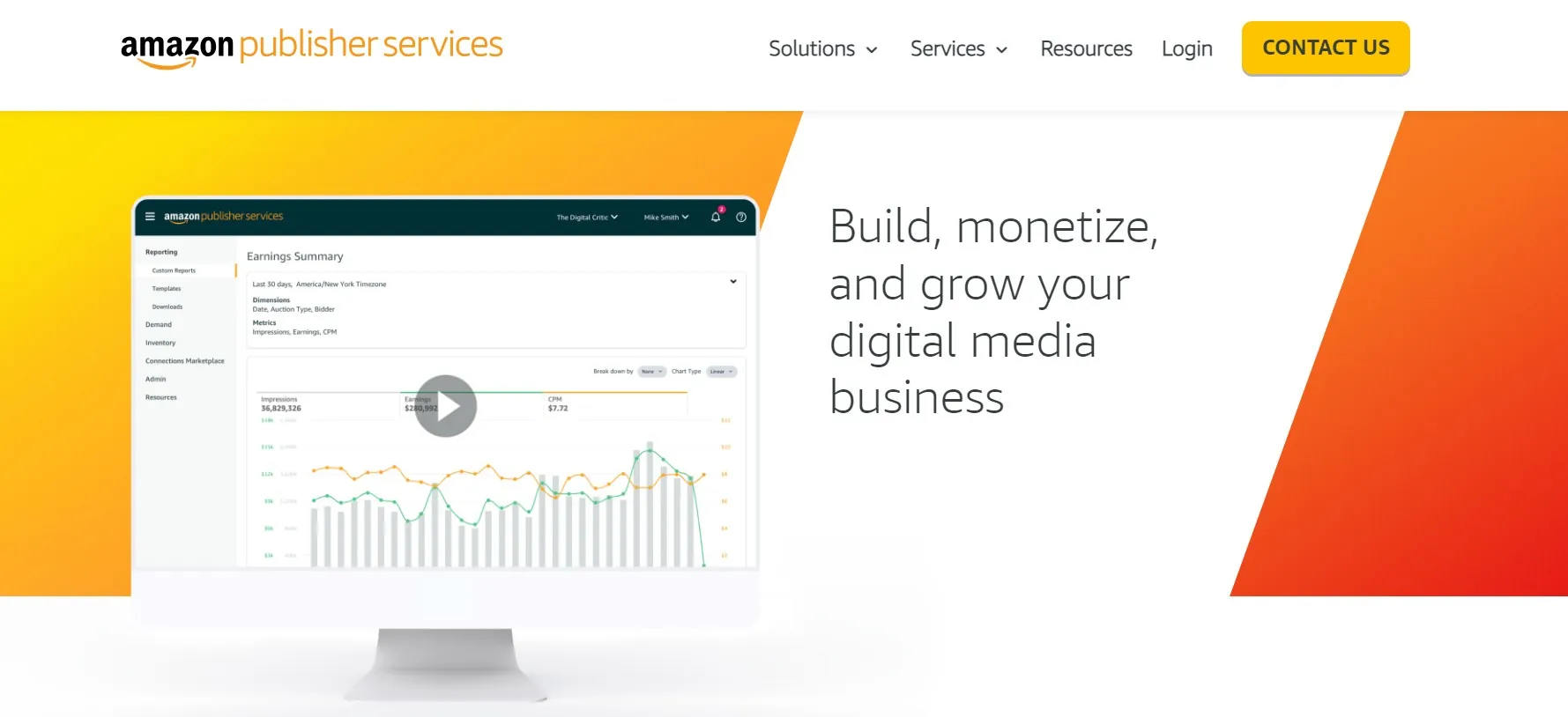
Amazon Publisher Services is a prominent CPM advertising network. It connects publishers with high-quality advertisers in the e-commerce industry. This platform is one of the highest paying CPM ad networks, but Amazon is quite picky about publishers allowed to join it. Publishers with small traffic have slim chances of joining; it’s best suited for mid-size or large publishers with sizeable traffic.
Core features
- Payment terms: Net 60;
- Payment methods: Check, Wire Transfer, and electronic funds transfer (EFT);
- Various ad formats: Banner ads, Display and Video ads, Native, etc.
8. BuySellAds

BuySellAds builds advertising solutions and one of the most reputable CPM ad networks for publishers and marketers. Publishers get profit through native performance networks, enterprise solutions, and the marketplace.
Core features
- Power to reject advertisements;
- No initial signup fee;
- Monetization ad formats including: Display advertising, native advertising, podcast, sponsored content, email;
- Payment methods: Wire Transfer ($500 minimum), Paypal ($20 minimum), cheque ($50 minimum);
- Payment frequency: 2 withdrawals per month.
9. Adcash

Adcash is another high-paying CPM ad network. It’s a global online platform for affiliates, media buyers, and website owners. This high-performance CPM network enables advertisers to reach a global audience and enables publishers to monetize their sites easily.
Core features
- No limit to the number of traffic to get approval;
- 21 verticals;
- Payment methods: Skrill, Wire Transfer, Webmoney, Bitcoin, and Payoneer;
- Minimum payment: 100 USD/EUR (Bank wire transfer), 5 USD/EUR (e.g., for PayPal).
10. SmartyAds

SmartyAds offers a broad range of monetization solutions to publishers. It is a programmatic network that curates ads from different networks and gives publishers access to them. With this wide net of advertisements, you can expect a 100% fill rate with ads relevant to your target audience. SmartyAds is one of the best-paying CPM networks.
Core features
- Minimum payout: $50;
- Payment terms: Net 60;
- Payment methods: PayPal and Wire Transfer;
- Ad formats: Banners, Interstitials, Native, and Video.
11. ExoClick
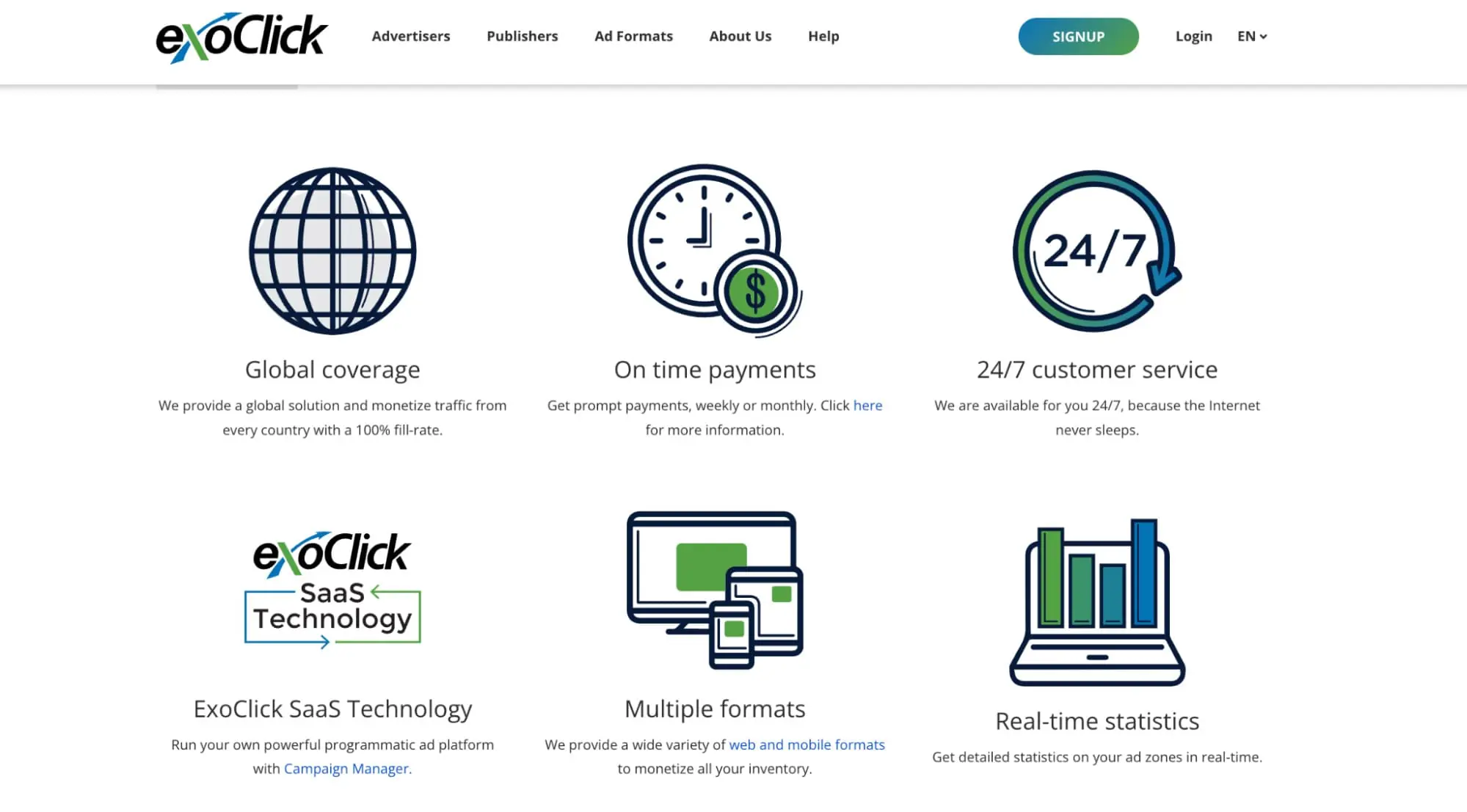
ExoClick is another best CPM ad network for publishers in our list. Its property software offers 20+ different ad formats, behavioral retargeting, and optimizing targeting to improve ROI.
Core features
- No minimum traffic requirement;
- Payment frequency: Weekly and monthly payments;
- Monetization ad formats: Banners, popunder ads, sticky messages, and video slider;
- Payment methods: Wire Transfer, cryptocurrency, Paxum.
12. Publift

Publift is one of the top CPM ad networks you should know about. Publift helps serve personalized ads that match your website audience. This platform offers programmatic ads to help publishers maximize their CPM earnings. It has an intuitive interface that’s easy to navigate.
Core features
- Minimum payout: $100;
- Payment terms: 30 days to 3 months;
- Payment methods: Bank transfer;
- Variety of ad formats including: Banners, Vignette, Sticky Footer and Sidebar.
13. Google AdSense

Google AdSense CPM ad network pays publishers well. At the same time, it may have stricter rules to qualify for website owners in many respects. You can start earning with your verified traffic and maximize revenue from there, using Google Ad Manager. You can use this network or other AdSense alternatives to monetize your websites with little hassle.
Core features
- Minimum payout: $100;
- Payment terms: Net 30;
- Payment methods: Wire and electronic funds transfer;
- Ad formats: Display and Video.
14. Media.net

Media.net is a high CPM revenue network. It serves highly-targeted ads to a website’s audience to maximize revenue. This platform is notable for its high-paying Display and Native ads and is used by many leading online publishers. Media.net does not disclose minimum traffic requirements publicly, but the consensus is that you need at least 10,000 monthly page views to qualify.
Core features
- Minimum payout: $100;
- Payment terms: Net 30;
- Payment methods: PayPal or Wire Transfer;
- Ad formats: Display and Native ads.
15. Sovrn

Sovrn is a publisher solution and a versatile programmatic advertising platform trusted by creators and publishers. With 50K+ merchants and $3B annual gross merchandise value, Sovrn provides CPA/CPC programs, tools and an omnichannel pipeline of top-tier advertising demand.
Core features
- 1.5M+ Daily commerce clicks;
- 500M Daily active users;
- Minimum payout: $25 ($50 for Wire Transfer);
- Payment terms: Net 45-60;
- Payment methods: PayPal, Wire Transfer, eCheck / Local Transfer, ACH (Direct Deposit);
- Ad formats: Display Ads, Video Ads.
Best Premium CPM Ad Networks for High-Traffic Publishers
High-traffic publishers have different priorities from smaller websites. When a site generates hundreds of thousands or millions of impressions, even a small difference in monetization efficiency can have a significant impact on monthly revenue.
At this scale, publishers can consider premium CPM advertising networks and larger ad platforms with extensive advertiser demand, advanced optimization, and access to multiple sources of demand.
Best Mid-Tier CPM Ad Networks for Growing Websites
Growing websites often sit between two extremes: they have enough traffic to generate revenue consistently, but not enough scale to justify a complex enterprise advertising setup. For these mid sized publishers, the priority is usually a combination of competitive rates, simple integration, useful reporting, and room to scale.
The best cpm ad network for publishers at this stage should provide access to sufficient advertiser demand without making monetization unnecessarily complicated. A good platform can complement other monetization methods, including Google AdSense, direct sales, and programmatic solutions.
When comparing networks, look at the practical details first:
- Traffic requirements: Can the network accept your current traffic and support you as it grows?
- Ad formats: Does it offer the formats that fit your website, including banners, native placements, or video?
- Traffic quality: Does the platform have demand for your main GEOs and audience?
- Ad quality: Are the ads relevant and suitable for your website?
- Optimization tools: Can you test placements and identify your best-performing inventory?
- Campaign management: How much control do you have over the ads shown to your audience?
- Payments: Are the payout terms clear and convenient?
For a growing website, flexibility can be more valuable than a headline CPM. Your traffic mix may change considerably as the site develops, so choosing a platform with flexible monetization solutions gives you more room to experiment.
It’s also worth testing more than one source of demand. A publisher might use Google AdSense or another platform for some inventory while testing a specialized CPM network on additional placements. Larger publishers can also explore solutions such as Google Open Bidding as their programmatic setup becomes more sophisticated.
The key is to compare actual results from your own traffic rather than assuming that the network with the highest advertised rate will produce the most revenue.
Best CPM Ad Networks for Small Publishers and Beginners
For beginners, advertising can seem more complicated than it needs to be. There are dozens of platforms, different pricing models, and plenty of terminology to learn before you even place your first ad.
The best cpm network for a small website should make the starting process straightforward. Low or no minimum traffic requirements, simple integration, multiple formats, clear reporting, and accessible support can be more useful than advanced features you may not need yet.
Start With the Right CPM Model
The cpm model is particularly easy to understand: advertisers pay based on impressions, while publishers monetize the inventory generated by their visitors.
However, not all cpm based ad networks operate in exactly the same way. Some use dynamic auctions and eCPM calculations, while others may offer specific fixed-rate campaigns or placements.
Before joining a network, make sure you understand how your earnings are calculated and which metrics appear in your dashboard.
Don’t Ignore Your Traffic GEO
A small website can still have valuable traffic. For example, publishers targeting India may specifically look for best cpm ad networks for Indian publishers or networks with strong demand for cpm ad networks for Indian traffic.
The same applies to publishers with Canadian traffic or audiences from other specific markets. Instead of searching for one universal CPM benchmark, compare networks based on your actual GEO, traffic quality, niche, and device mix.
Test Different Formats
Beginners often start with a standard banner because it is familiar and easy to understand. A cpm banner ad network can be a good option for websites where display placements fit naturally into the page.
But banners aren’t the only option. Depending on the website, native ads, video, interstitials, or other formats may produce stronger results.
The best strategy is to start with a small number of suitable placements and monitor the results. Use your monetization tools and optimization tools to identify what works before adding more inventory.
Don’t Overcomplicate Your Setup
A common mistake among new publishers is joining several ad networks for publishers at once and placing ads everywhere.
More ads don’t automatically mean more revenue. Too many integrations can make the website slower, reduce ad quality, and create a poor user experience.
Start with one or two suitable monetization solutions, track the key metrics, and make changes based on the data. Once your traffic grows, you can gradually expand your setup and experiment with additional demand sources.
If you’re looking for a simple way to start monetizing your website, register as an Adsterra publisher and test different monetization options with your own traffic. You can start small and optimize your setup as your audience grows.
Real Publisher Results: Case Studies and Revenue Benchmarks
CPM benchmarks can be useful for setting expectations, but they should never be treated as guaranteed earnings. Two websites with the same number of impressions can produce completely different results because their GEO, audience, ad formats, and traffic quality are different.
That’s why real publisher performance is best evaluated using several key metrics rather than CPM alone.
What Revenue Depends On
The most important variables include:
Traffic volume. More impressions create more opportunities to monetize, but volume alone doesn’t guarantee higher revenue.
GEO. Advertiser demand differs between markets. Indian traffic, Canadian traffic, and traffic from other GEOs can have very different CPM levels depending on the vertical and current demand.
Ad format. A standard CPM ad may perform differently from a native placement, video ad, or another format.
Placement. Above-the-fold and highly visible inventory often has different value from placements users rarely see.
Traffic quality. Genuine, engaged users are more valuable to advertisers than low-quality or suspicious traffic.
Seasonality. Advertising budgets fluctuate throughout the year, which means CPM rates can rise or fall even when traffic remains stable.
A Better Way to Compare Revenue
Consider two hypothetical publishers, both generating 100,000 impressions per month.
Publisher A earns $150, giving them a $1.50 eCPM.
Publisher B earns $300, resulting in a $3 eCPM.
The difference isn’t necessarily caused by traffic volume. Publisher B may have a more valuable GEO, stronger advertiser demand, better placements, or a more effective combination of formats.
This is why publishers should compare revenue, eCPM, fill rate, impressions, and performance by placement rather than focusing on a single CPM figure.
Conclusion
There is no universal number that defines a “good” CPM. A rate that looks low for one GEO can be strong for another, while a seemingly high CPM may produce little revenue if fill is poor.
The same applies when comparing Google AdSense, direct sales, programmatic platforms, and specialized CPM networks. Each monetization method has different mechanics and advertiser demand. For larger websites, combining several sources can sometimes make sense. Publishers may use direct sales for premium placements while filling the remaining inventory through programmatic or CPM-based demand. As the operation grows, tools such as Google Open Bidding and other programmatic solutions can also become relevant.
The most useful benchmark is therefore your own historical performance. Track your results over time, compare formats and GEOs, and look for consistent improvements in your effective revenue per thousand impressions. That gives you a much clearer picture of whether a cpm ad network is actually helping your website generate revenue.
Best CPM ad networks for publishers: FAQ
What is a CPM publisher network?
A CPM publisher network connects website owners with advertisers who pay for ad impressions. Instead of selling advertising space directly, publishers can use the network to access advertiser demand, serve ads, and earn revenue based on the impressions generated by their audience.
What is a good CPM for publishers?
There is no universal CPM that can be considered good for every publisher. CPM rates depend on factors such as GEO, niche, device, ad format, seasonality, and traffic quality. The most useful way to evaluate a network is to compare your actual eCPM and total revenue over time.
What is header bidding and do CPM networks support it?
Header bidding is a programmatic technique that allows multiple demand sources to compete for an impression before an ad is served. It can increase competition for available inventory and potentially improve yield.
However, header bidding can also make an ad setup more technically complex. Publishers should consider whether the additional demand and potential revenue justify the extra implementation and management requirements.
How can publishers increase their CPM revenue?
Start by improving the quality and value of your inventory. Test different ad formats and placements, compare GEO performance, monitor fill rate and eCPM, and remove placements that generate little revenue or negatively affect the user experience.
Publishers can also experiment with different demand sources, including header bidding or multiple networks, once their traffic volume and technical setup justify the additional complexity. The most effective optimization strategy is usually simple: test, measure, and keep what performs best for your audience.