
You’ve likely landed in Facebook Jail if you’ve had your Facebook account restricted or marketing campaigns stopped. With more automation and AI content moderation, publishers can face temporary blocks or permanent suspensions even more often than earlier.
In this definitive 2026 Facebook Jail guide, you’ll learn how to:
- Recognize when you’re in Facebook Jail
- Identify how bans happen
- Stay compliant with Facebook rules
- Recover your account or get a plan if it’s impossible
- Use Smartlinks to keep monetizing outside of Facebook.
You can mix ad formats on your website or blog and boost revenues by leading social or web traffic there. Explore your monetization platform!
What is Facebook Jail?
Facebook Jail is a term used to describe temporary or permanent restrictions imposed on your Facebook account. It happens when you break the platform’s rules by mistake or knowingly.
This imprisonment can affect:
- Your personal account
- Business pages
- Ad accounts
- FB groups you manage or moderate.
Facebook jail meaning includes:
- Being blocked from posting, commenting, or messaging
- Losing access to particular options and settings
- Getting Meta Ads accounts disabled or restricted
- Watching your entire account get locked down without any warnings.
The term “Facebook prison” has become more common as Meta tightens restrictions—especially for publishers who rely on organic growth, Facebook marketing, or affiliate traffic.
Signs you’re in Facebook Jail
Let’s now list the main markers for how to know if you are in Facebook Jail and provide some essential tips to navigate this situation. These signals will help you react more quickly and protect associated assets or Facebook groups.
How do you know if you are in FB jail:
- You receive a notice saying you temporarily can’t post, comment, message, or use certain features due to Community Standards violations.
- Your Account Status shows restrictions or policy violations.
- You lose access to groups, pages, or advertising tools.
- You cannot send friend requests or interact normally with other users.
- Your ad account is marked as “Limited,” “Restricted,” or “Under Review.”
Some users experience temporary feature restrictions where they can view content but cannot comment, react, or post.
Understanding Facebook Restrictions
Facebook restrictions can affect different parts of your account ecosystem, from limited feature access to full account disablement. Both businesses and individual creators may face temporary or permanent enforcement actions, so it’s important to understand the risks and know how to appeal restrictions if they occur.
Temporary restrictions
Temporary restrictions can last from a few hours to 30 days.
During this period, Facebook may limit specific features, including:
- Posting or sharing content
- Commenting, liking, or reacting
- Sending messages through Messenger
- Running or managing ads
Permanent restrictions
Permanent restrictions are the most severe type of enforcement and may affect your entire Meta account ecosystem.
You may lose access to:
- Your Facebook account
- Meta Business Manager
- Linked ad accounts and pages
- Associated payment methods and business assets
What Triggers Facebook Jail
Common actions that may trigger Facebook restrictions include:
- Sending repeated friend requests to people you do not know
- Sending too many friend requests within a short period
- Using automation tools or suspicious account activity patterns
- Mass liking, commenting, or posting across multiple pages or groups
- Posting graphic violence, hate speech, adult content, or other policy-violating material
- Publishing plagiarized, misleading, or spammy content
- Sharing links to websites flagged as spam, unsafe, or fraudulent
- Promoting deceptive offers, scams, or harmful products
- Excessive tagging or repetitive posting behavior
Facebook’s automated moderation systems can now detect suspicious behavior and policy violations very quickly, especially when content resembles previously flagged material.
Restriction severity varies depending on the violation type, account history, and repeated offenses.
Common Reasons for Facebook Jail
Facebook may restrict your account for various reasons. Here’s what typically triggers Facebook Jail and how to avoid risky activity.
1. Spamming
- Posting too frequently from a new account
- Posting the same content repeatedly
- Leaving identical comments across multiple pages or groups
- Tagging random people or pages excessively
Spam-like behavior is one of the fastest ways to get restricted, especially on new accounts. Facebook tracks account activity patterns, including likes, comments, clicks, shares, and messaging behavior.
Warming up an account can take days or even months. Keep your content unique, interact naturally, and send friend requests only to people you know or genuinely interact with.
2. Meta Policy Violations
Examples include:
- Violating Facebook’s Community Standards
- Sharing hate speech, harmful content, or misinformation
- Running deceptive ads with misleading claims
- Promoting restricted or prohibited verticals in certain regions (such as adult or iGaming content)
- Using cloaking, redirects, or misleading ad copy
- Operating multiple fake or unauthorized personal accounts
- Using bots or automation tools
- Sharing suspicious or low-quality URLs in posts or bios
To reduce risks, many affiliate marketers avoid placing Smartlinks or aggressive monetization URLs directly in Facebook posts or bios. Instead, they use landing pages or content hubs that redirect traffic more naturally.
3. Suspicious Profile Signals
- Empty or fake-looking profiles
- Sudden spikes in activity on a new account
- Missing profile photos, timeline activity, or social connections
- Frequent logins from different devices, browsers, or flagged IP addresses
- Inconsistent account behavior patterns
4. External Reports
- Other users reporting your content or profile
- Group members flagging posts as spam
- Facebook moderators marking your ads or links as unsafe or misleading
These are only some of the factors that may trigger restrictions or suspensions. Facebook continuously evaluates accounts over time using automated systems that analyze account behavior, device activity, login patterns, and content quality.
How to avoid Facebook Jail Checklist
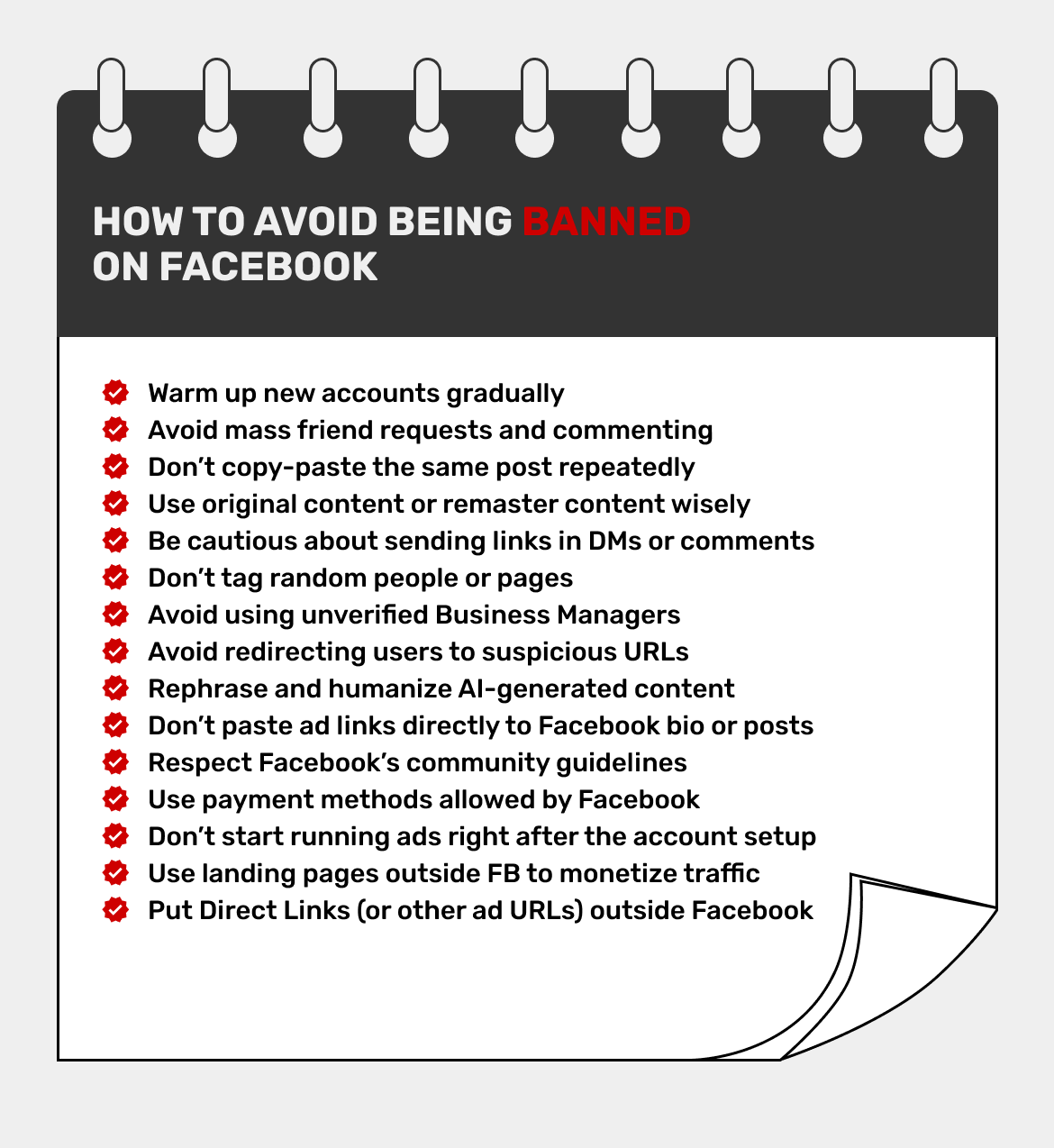
Extra: Modern Meta moderation also evaluates landing page quality, user feedback, advertiser reputation, payment trust signals, and compliance risks tied to specific verticals — not just account activity or spam behavior.
Avoiding Facebook Jail cases today means being compliant, consistent, and committed. Here’s how to increase chances to stay safe or reduce negative cases.
1. Warm up every new account
Warming up an account means gradually developing it, making it look natural and credible. Don’t boost ads or start mass posting right after creating a profile, but act like a real human instead. The account warmup duration is somewhere between 14 and 30 days before you can create a first ad campaign. Filling out the profile and providing all verification information is also part of the warming-up process.
- Spend time reading posts and watching videos in groups
- Add a couple of likes and unique comments
- Avoid unnecessary tagging in the beginning
- Post real photos and content
- Add a few known friends
- Join a couple of relevant Facebook groups
- Visit Facebook Ads Manager, but don’t launch any paid ads
2. Avoid repetitive (copy-paste) posting
- Don’t repost identical messages in comments or groups
- Leave some character space between post sections
- Avoid adding advertising URLs early in new accounts
- Stay away from selling products or services in posts
- Don’t overdo with tagging people
3. Don’t overdo with automation
- Don’t use tools for auto-commenting, direct messaging, or joining groups if you’re not a pro.
- Avoid software that can trigger Facebook to detect bot behavior.
4. Stick to posting limits rules
- No more than 3–5 posts per hour for new accounts
- Avoid posting continuously with no user engagement
- Look for other ways to present yourself (e.g., videos)
5. Review content quality
- No plagiarized content (remastering evergreen topics is OK)
- Avoid posting shocking or offensive images
- Check your images with Cloud Vision by Google if doubting
- Don’t spread hate or opinionated content
- Stay away from misleading claims
- Keep control over peoples’ reactions to your posts
What to do If you’re in Facebook Jail
Ok, what to do if you’re already restricted? How do you get out of Facebook jail and continue evolving your business? There’s an algorithm that’ll help you respond faster and increase the number of chances to recover from the ban:
Step 1: Identify the restriction put
- Check your inbox for emails from the Support Team or look for Support Notifications
- Check the Account Quality Dashboard
- Business Manager (ad warnings, payment flags)
Step 2: Submit a professional appeal
You’ll need to write an email to appeal the restriction. Go to the restriction notice → click “Request Review” or “Submit Appeal.”
- Be respectful when laying out your request
- Avoid aggressive or defensive language
- You can show you worry about the account, but don’t blame the Support.
Example:
“Hi Meta Support, I believe this block was a misunderstanding. This account belongs to a real person, my content is human-created, and I follow the Community Standards. I kindly request a review from your side.”
Step 3: Wait till Meta responds
- Don’t try to work around the ban by creating new accounts
- Most temporary blocks expire in a few hours to 30 days
- For permanent blocking, a successful appeal is your only option.
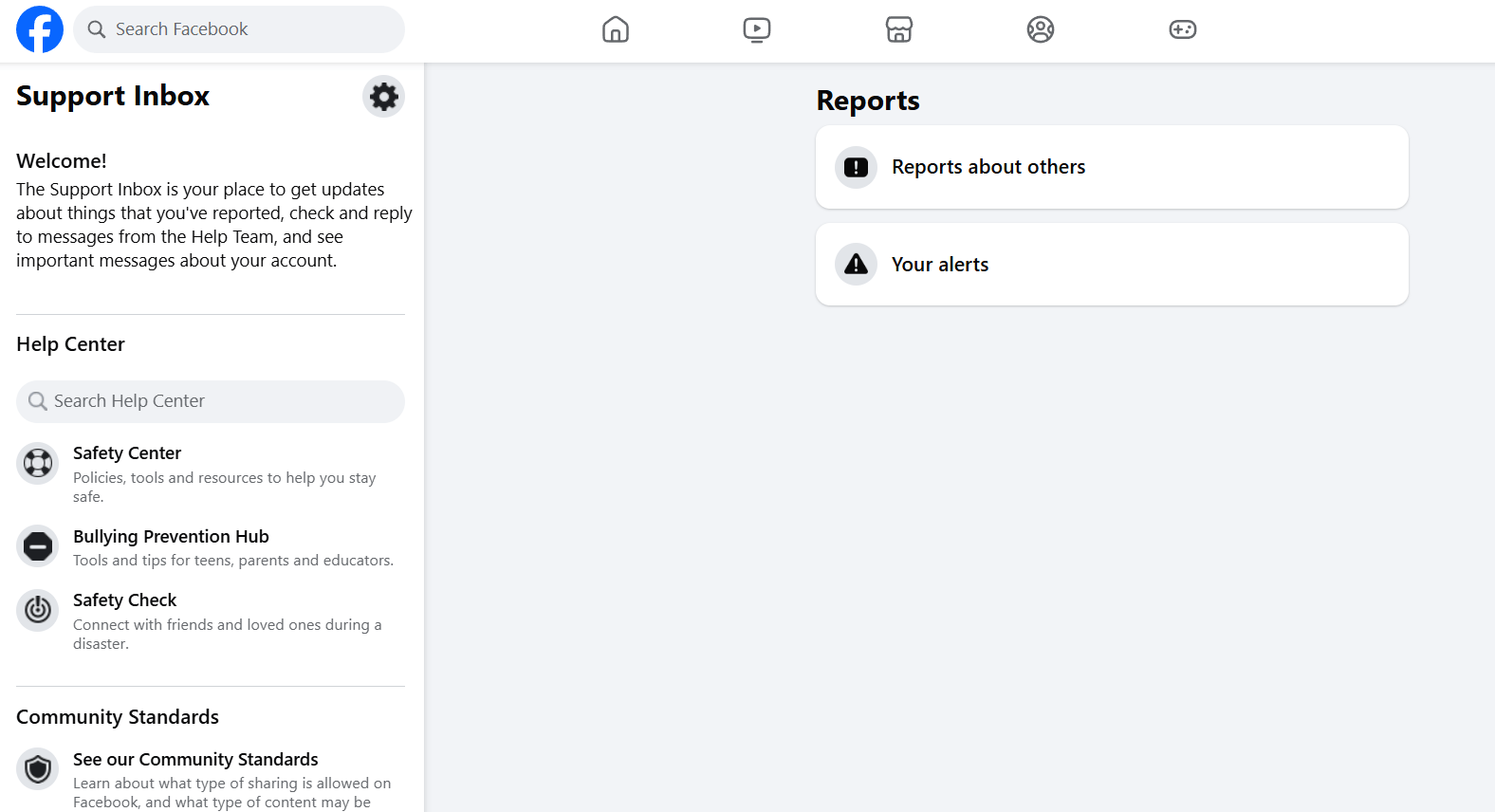
Tip: Facebook Support Inbox provides insights into reported posts or spam complaints; you don’t need to search for these specifically. Here, you can also upload your requests, check community standards, or respond to messages from the Help Team.
The business impact of Facebook Jail
Meta restrictions don’t just affect a single account—they can disrupt your entire advertising infrastructure and monetization performance. In this article, we’ll cover common reasons for Meta policy enforcement actions, how to reduce risk, and the business impact of restrictions.
You may lose or have limited access to:
- Your Meta ad account (restricted or disabled)
- Campaign delivery, with ads paused, rejected, or not delivering
- Budget spending capabilities within affected ad accounts
- Your Page and connected business assets within Meta Business Suite (Business Portfolio)
- Audience performance data and pixel tracking continuity
Side effects
- Related assets may be restricted if Meta detects shared ownership signals (e.g., Business Portfolio, payment methods, pixels)
- Domains may lose trust signals or be restricted from advertising
- Account or Business Portfolio integrity signals may affect new ad accounts or assets created later
Staying compliant with Facebook rules in 2026
Facebook Jail can lead to the complete destruction of revenue streams, especially if you don’t have backup traffic sources. Facebook’s policies change frequently, and activities that previously triggered temporary restrictions may now result in permanent bans. Here’s how to stay on top of new rules and details Facebook shares.

Follow Facebook guidelines updates to avoid Facebook Jail
- Read Facebook Community Standards and Ad Policies quarterly
- Subscribe to Meta’s Business Blog or Newsroom
- Check your account quality regularly
Maintain account trust
- Ensure you switched 2FA (two-factor authentication)
- Use verified email/phone for your Facebook account
- Don’t log in from flagged IPs
- Don’t use one device to enter multiple accounts
- Avoid using bot traffic or other resources of fake users, likes, or clicks
Tools to stay compliant
- Canva – design compliant visuals that don’t trigger flags
- Grammarly + Copyscape – check grammar and plagiarism
- AdEspresso – A/B test your ads before publishing
- Cloud Vision – check your content for possible Community Standards violations (nudity, offense, shocking images, etc.)
- Quilbot – rephrase or humanize your copy to maintain original content
- Adsterra ad platform – use for display monetization outside Facebook and other social media
Smartlink as a way to monetize in 2026
It’s essential to grab free solutions that help earn and prevent account bans. Smartlinks let you monetize Facebook traffic without running advertising campaigns or posting side URLs on Facebook.
What are Smartlinks?
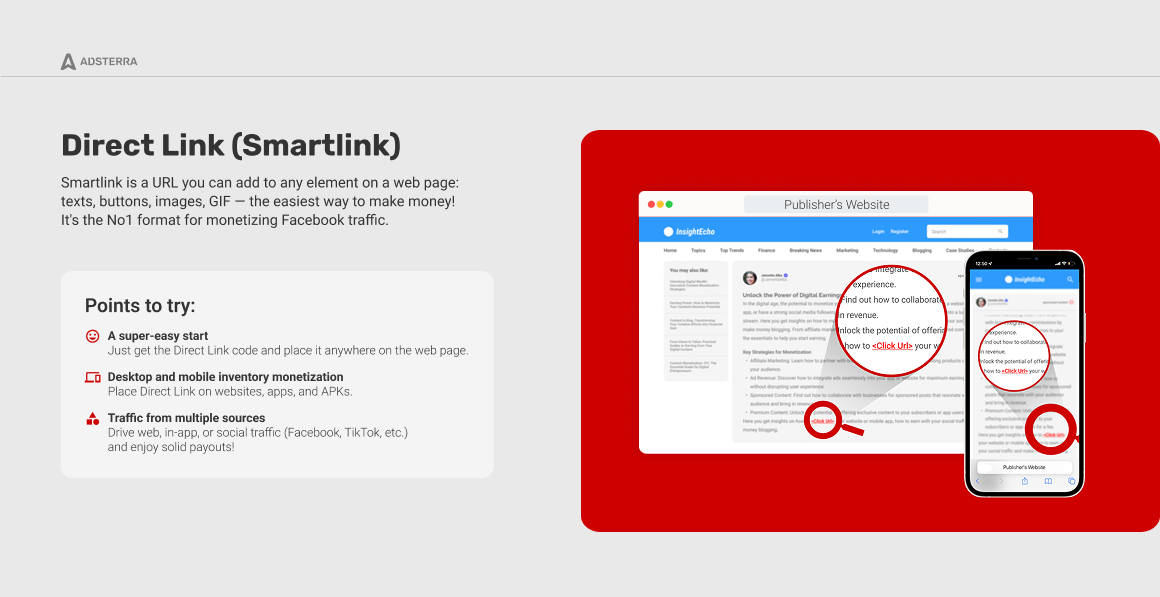
These are simple URLs that direct visitors straight to an offer or web page after a click. The magic happens when each visitor lands on a relevant advertising page.
Best practices for Smartlinks:
- Never place them directly on Facebook, YouTube, TikTok, or any other social media.
- Instead, use a clean bridge page (find out how to create minimal sites in minutes.)
- Post helpful content on Facebook, then link out to the bridge site with a Smartlink.
Bonus monetization: display ads on landing pages
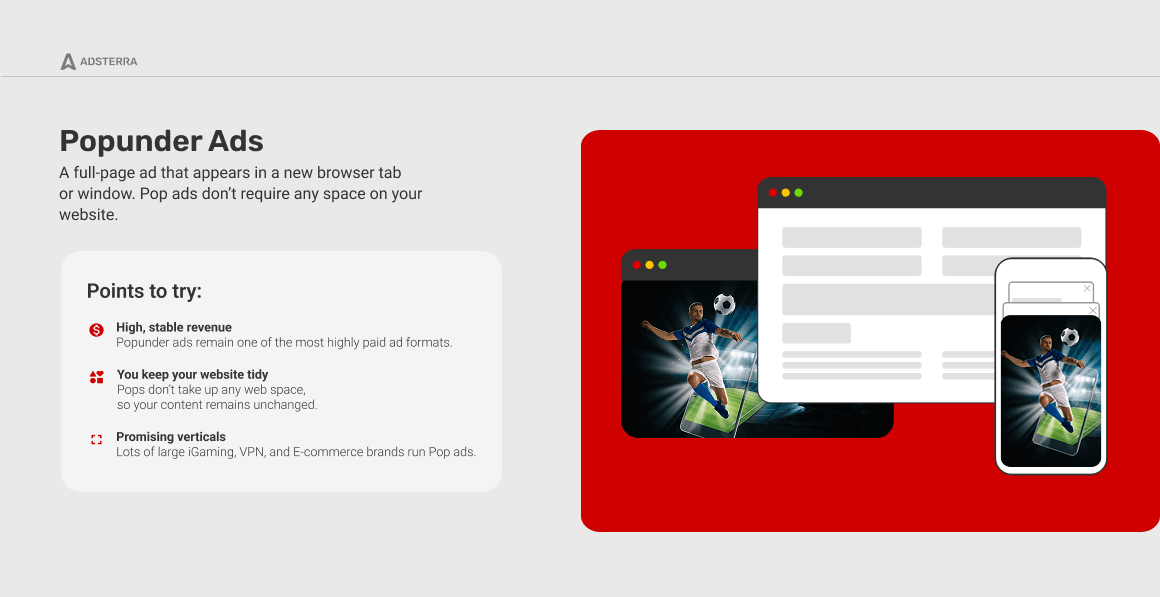
Once Facebook audiences or other users land on your page, they can meet:
- Popunders
- Native Banners
- Push ads.
Platforms like Adsterra offer clean, optimized formats that don’t require coding skills. You simply put ads on your website and get paid for Facebook traffic.
Conclusion
Facebook Jail (when it’s a temporary ban) can wreck your plans, but it can also teach you to play smart.
If you want to succeed in 2026, respond to trends and use these insights:
- Respect Facebook’s guidelines
- Avoid spam and fraud, maintain human and original content
- Use tools and strategies that are not normally noticed as suspicious
- Drive traffic from Facebook or other social media to a web page or site where you place ads Facebook can’t review.
Display advertising is an evergreen and future-proof path for publishers who want to scale revenues.
Facebook Jail FAQ
Is Facebook Jail real?
Yes. It’s a term for account suspensions or bans that prevent users from using some or all features on Facebook.
How do you know if you’re in Facebook Jail?
You may see a Facebook Jail notification, experience blocked features, or receive a warning about community standards.
What happens when you are in Facebook Jail?
That’s what happens in Facebook jail in 2026: your account can be partially or fully restricted, depriving you of the ability to post and advertise.
You may be unable to:
– Post
– Comment
– Message
– Access groups or pages
– Run ads.
How long does Facebook jail last?
It can last from 24 hours to 30 days, depending on the violation and the account’s reputation. To know how long Facebook jail lasts, it’s better to divide all bans into two categories:
– Temporary bans: a few hours to 30 days
– Permanent bans: indefinite unless appealed.
What are the new Facebook Jail restrictions?
New restrictions in 2026 center around AI-detected spam, pushy engagement methods, and account duplication. The latter especially matters for business and affiliate marketers.
The platform doesn’t accept the following:
– Spam, hate, and misinformation (fraud)
– Fake accounts
– Duplicate posts
– Excessive friend requests
– Posting adult or offensive content.
Can Facebook ban you permanently?
Yes, Facebook can impose permanent blocking for repeated violations or severe policy breaches, especially if your assets have been marked as harmful or misleading.
What triggers Facebook Jail in 2026?
Mass posting, repetitive (spam) content, suspicious links, numerous friend requests, or fake engagement techniques can trigger automated bans.
How to avoid Facebook Jail?
To succeed in Facebook affiliate marketing, stick to content uniqueness and value, avoid aggressive promotions, and send users to safe pages and websites. Stay updated through Facebook’s official guidelines, use official advice to appeal bans, and complete all the information required.